Hominin Fossils

The fossil record between apes and modern humans is dense enough that classifying individual specimens is contested.

16 min readUpdated

Hominins are the group containing modern humans and all species closer to us than to chimpanzees. Several thousand specimens are catalogued, spanning roughly seven million years.

The record is dense enough that the practical disagreement is about classification: where one species ends and another begins, and which specimens belong together. That difficulty is itself evidence, because sharply separate created kinds would not produce it.

The main species

Species Age (millions of years) Brain volume (cm³) Key features
Sahelanthropus tchadensis 7.0–6.0 ~350 Foramen magnum positioned forward, suggesting upright posture
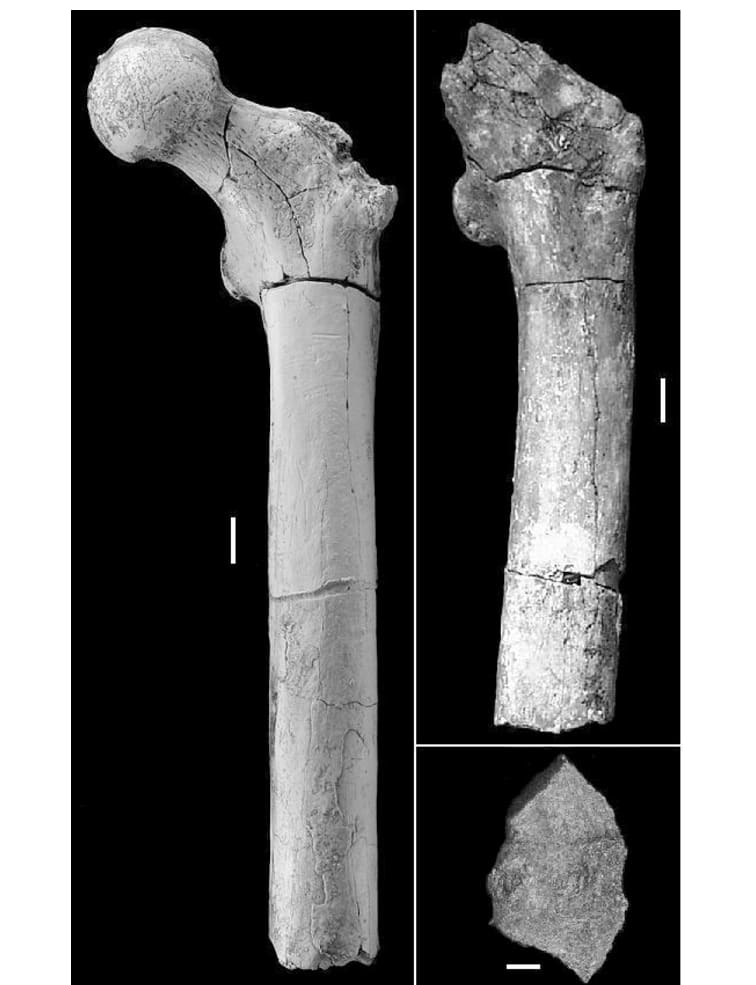
Orrorin tugenensis 6.0–5.7 Unknown Femur neck shape indicates habitual bipedalism
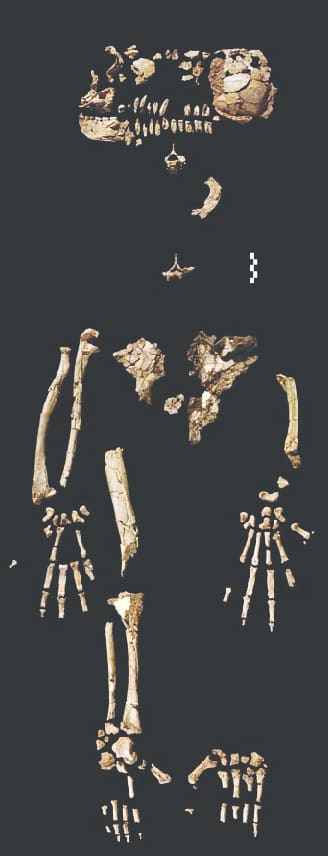
Ardipithecus ramidus 4.4 ~300–350 Grasping big toe with a pelvis adapted to bipedal walking
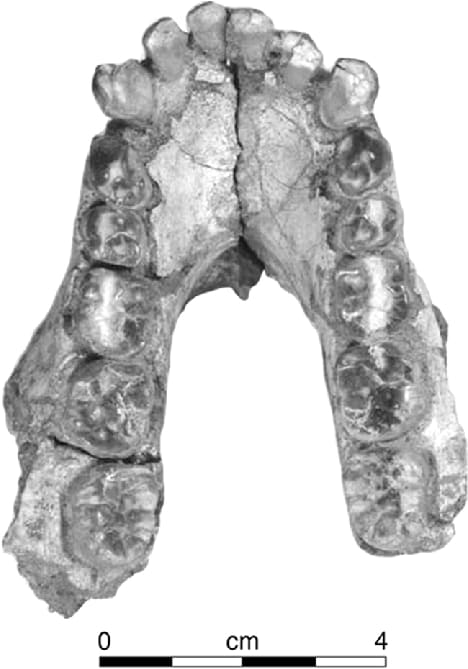
Australopithecus anamensis 4.2–3.9 ~370 Tibia adapted for weight-bearing
Kenyanthropus platyops 3.5–3.3 Unknown Unusually flat face for its age; contested as a distinct genus
Australopithecus afarensis 3.9–2.9 380–500 "Lucy"; fully bipedal, ape-sized brain
Australopithecus africanus 3.3–2.1 ~460 The Taung child, first found 1924
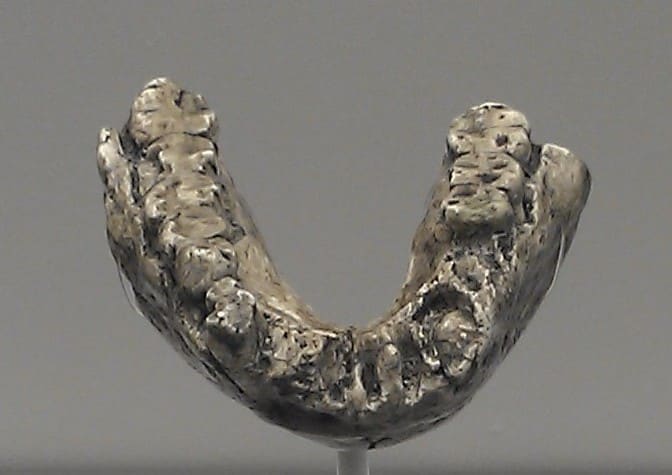
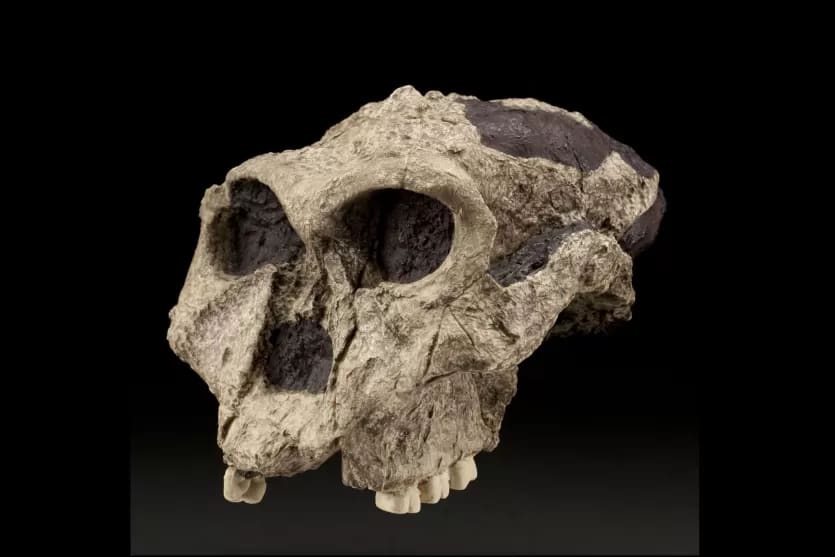
Paranthropus robustus 2.0–1.2 ~530 Massive jaw and cheek teeth for heavy chewing
Paranthropus boisei 2.3–1.2 ~500–550 "Nutcracker Man"; the largest molars of any hominin
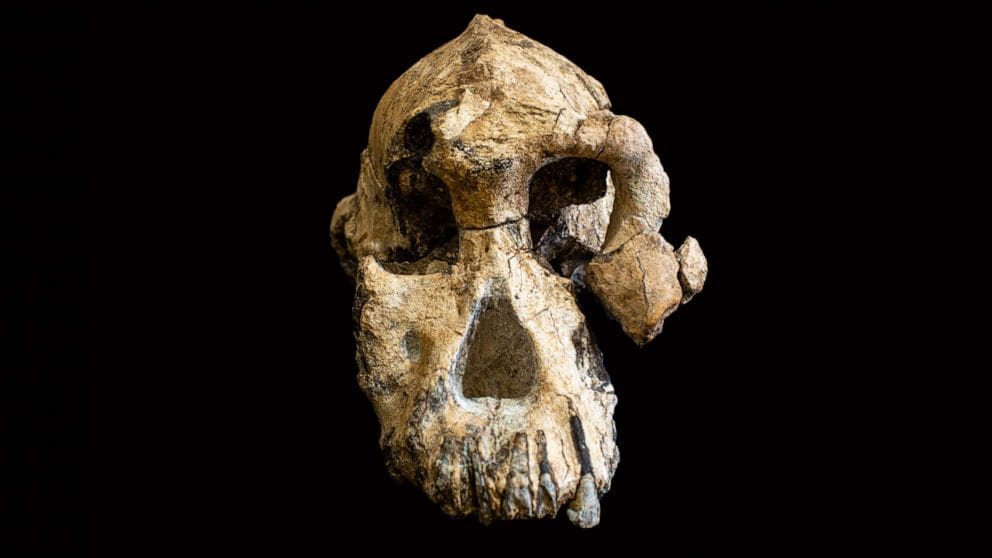
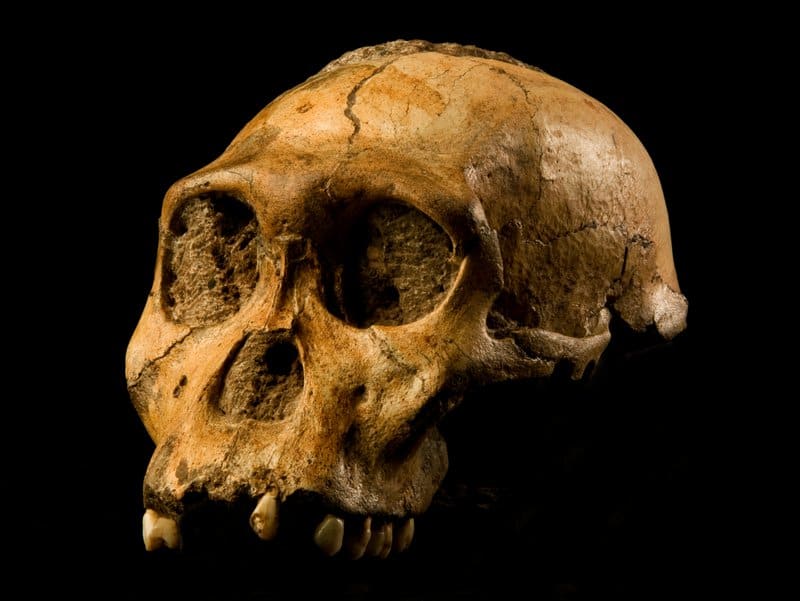
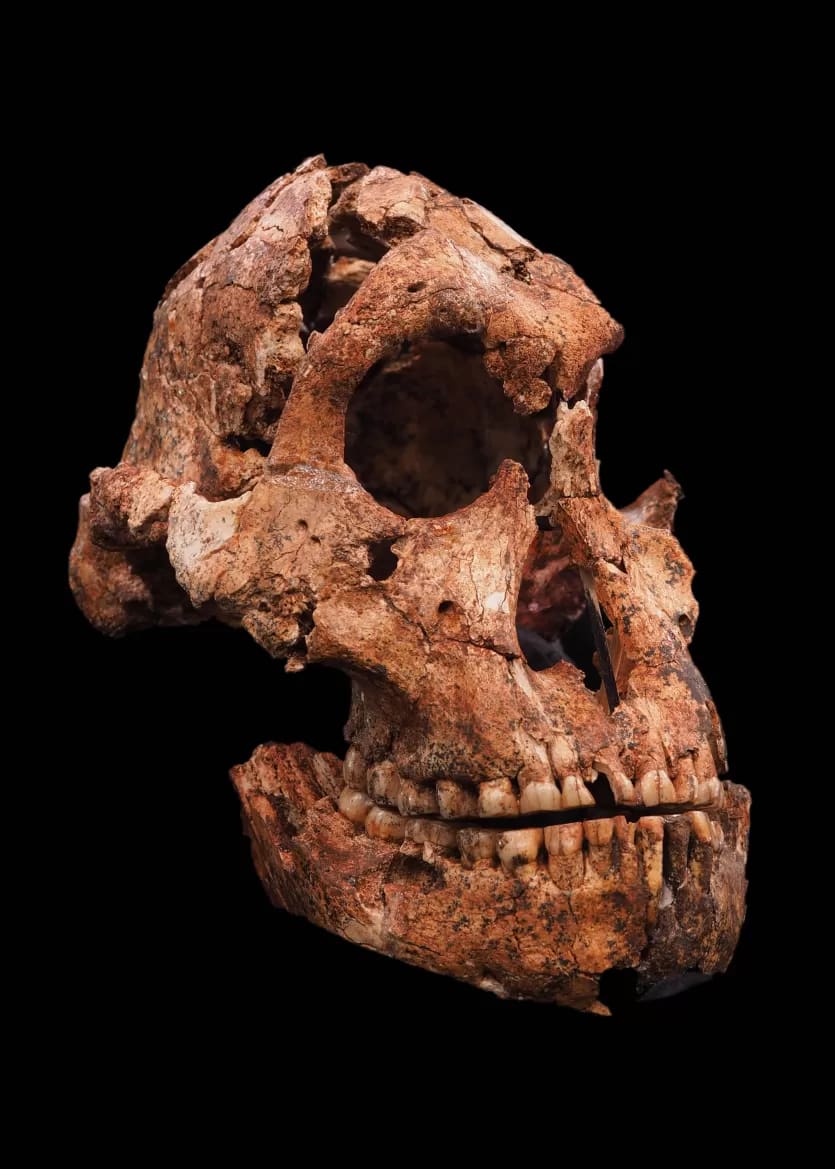
Australopithecus sediba 2.0–1.98 ~420 Mosaic of australopith and early Homo traits
Homo habilis 2.4–1.4 550–690 Associated with stone tools
Homo erectus 1.9–0.11 850–1,100 Modern body proportions; first to leave Africa
Homo heidelbergensis 0.7–0.2 1,100–1,400 Probable common ancestor of humans and Neanderthals
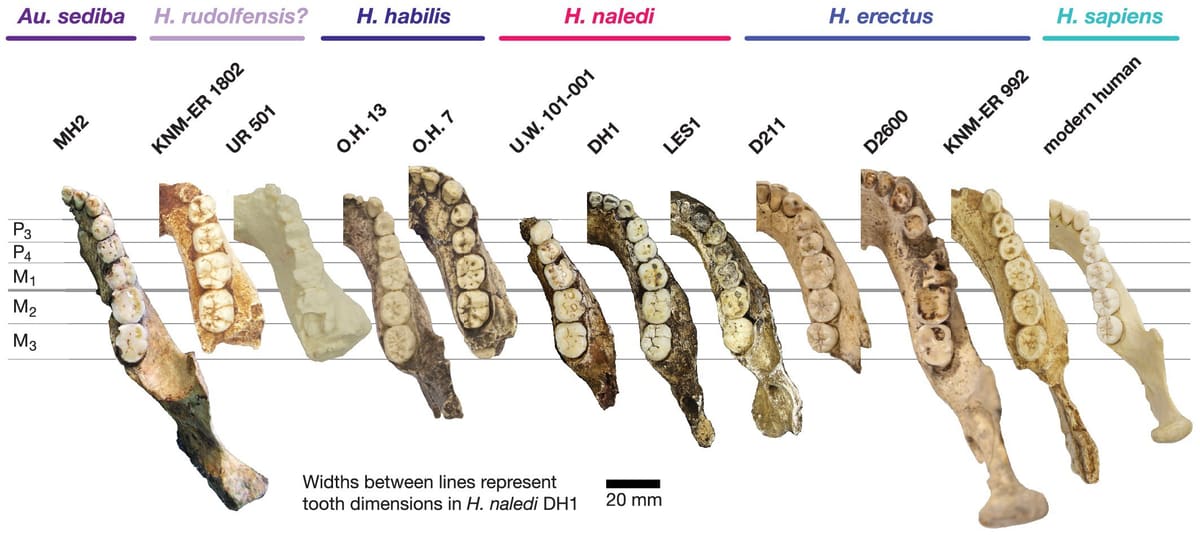
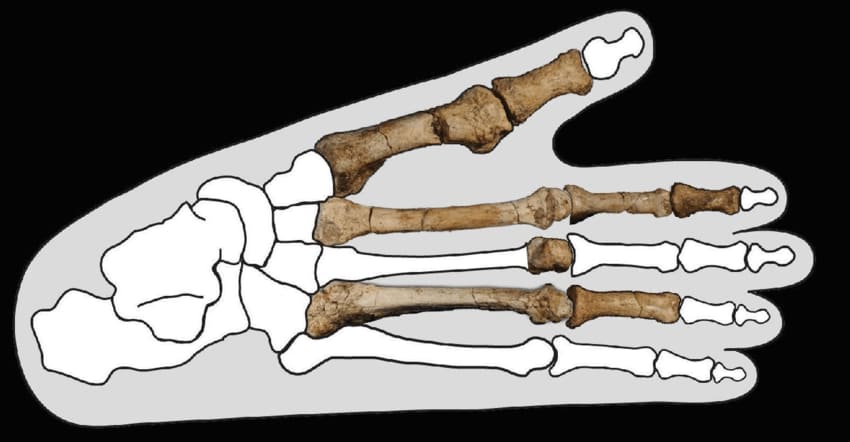
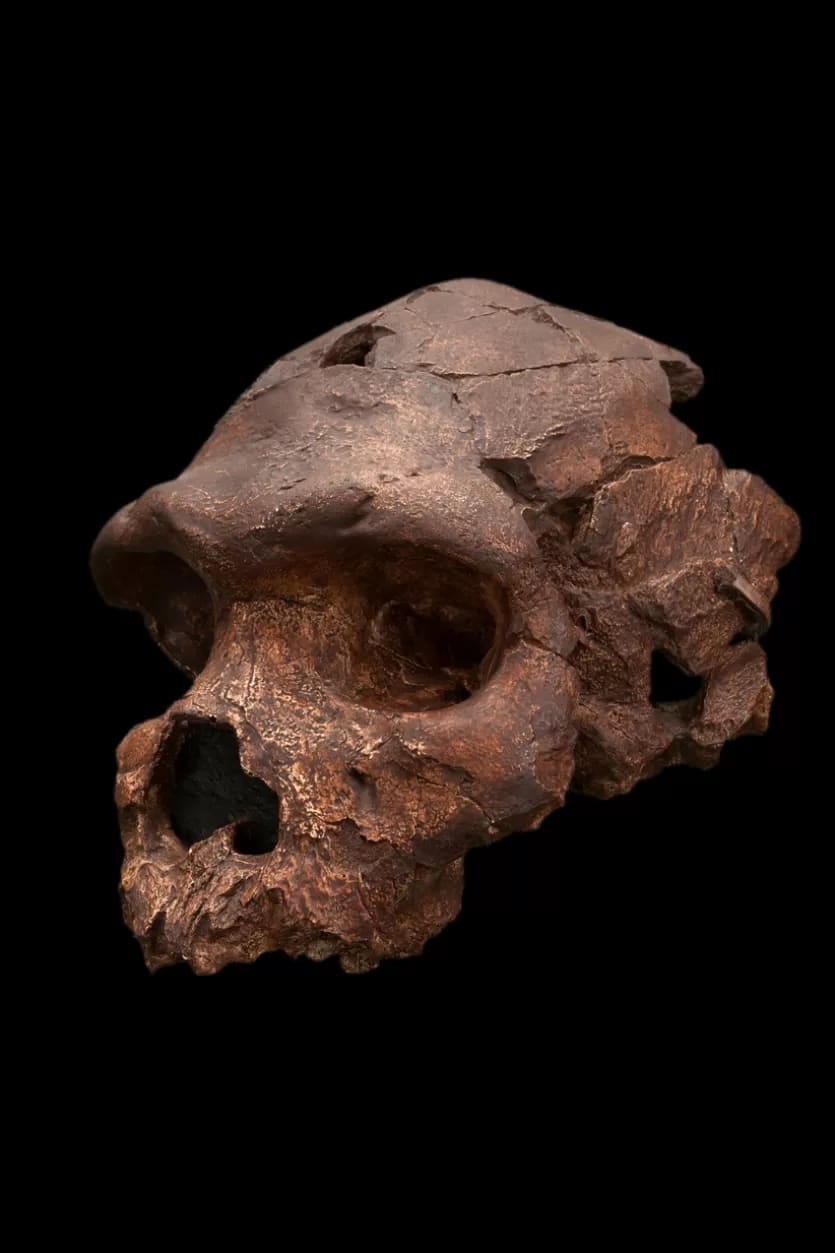
Homo naledi 0.335–0.236 ~560 Small-brained but with humanlike hands and feet
Homo floresiensis 0.1–0.05 ~380 "Hobbit"; extreme island dwarfism in Flores, Indonesia
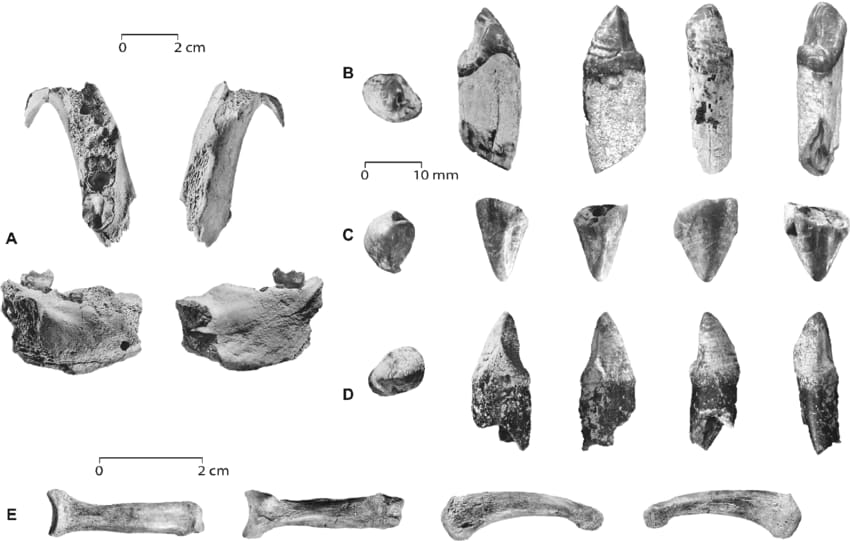
Homo luzonensis 0.067–0.05 Unknown Curved toe bones and small teeth mixing primitive and derived traits
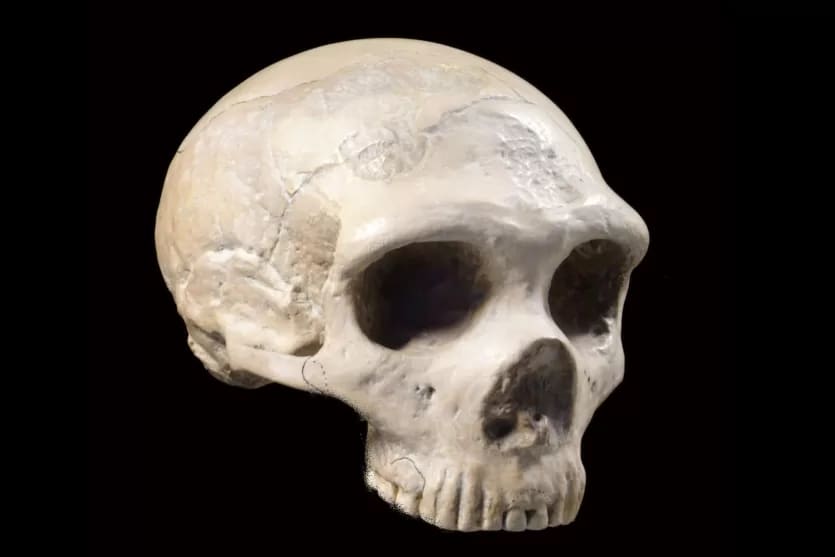
Homo neanderthalensis 0.4–0.04 1,200–1,750 Larger brain than modern humans on average
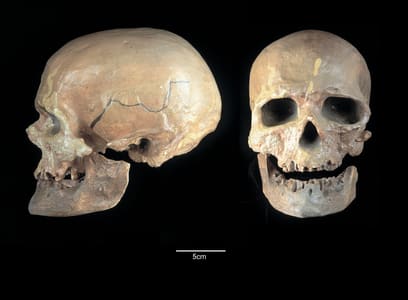
Homo sapiens 0.3–present 1,200–1,500 Jebel Irhoud, Morocco, at about 315,000 years

Brain volume roughly quadruples across the sequence while bipedalism appears early — Lucy walked upright with a brain the size of a chimpanzee's. The order matters: the traditional expectation was that a large brain came first.

Several older type descriptions (H. erectus, 1894; H. neanderthalensis, 1864) predate the DOI system, so the linked papers above are the key dating or genomic studies rather than the original species descriptions.

The specific finds

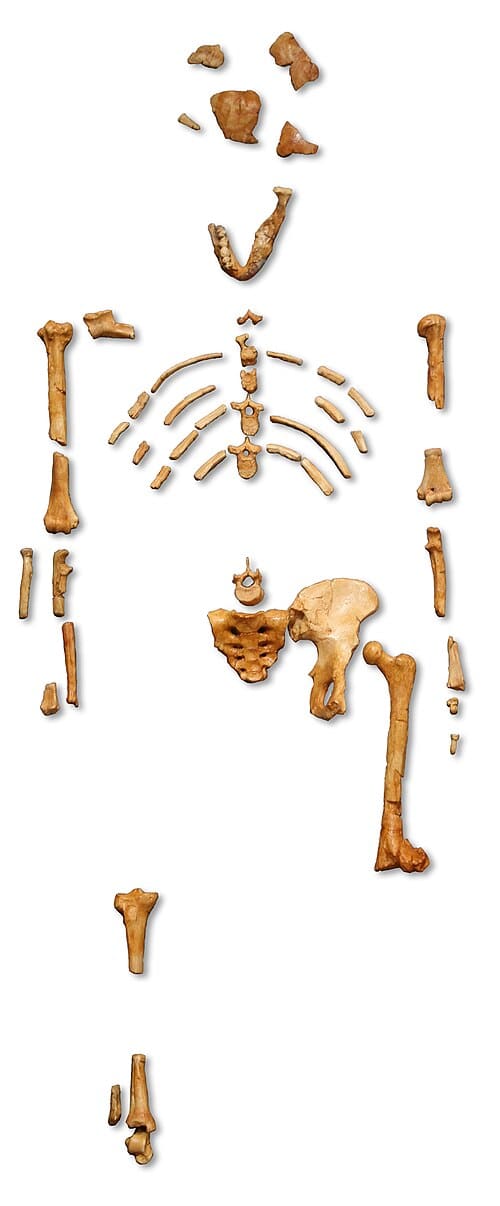
Lucy (AL 288-1, 1974, Hadar, Ethiopia). About 40% of a skeleton at 3.2 million years. The pelvis, knee, and femur angle establish habitual bipedalism; the arms remain relatively long.

The Laetoli footprints (1976, Tanzania). Trackways in volcanic ash dated to 3.66 million years, showing an arched foot, an adducted big toe, and a heel-strike gait. These are behavioural evidence rather than skeletal, and they predate stone tools by more than a million years.

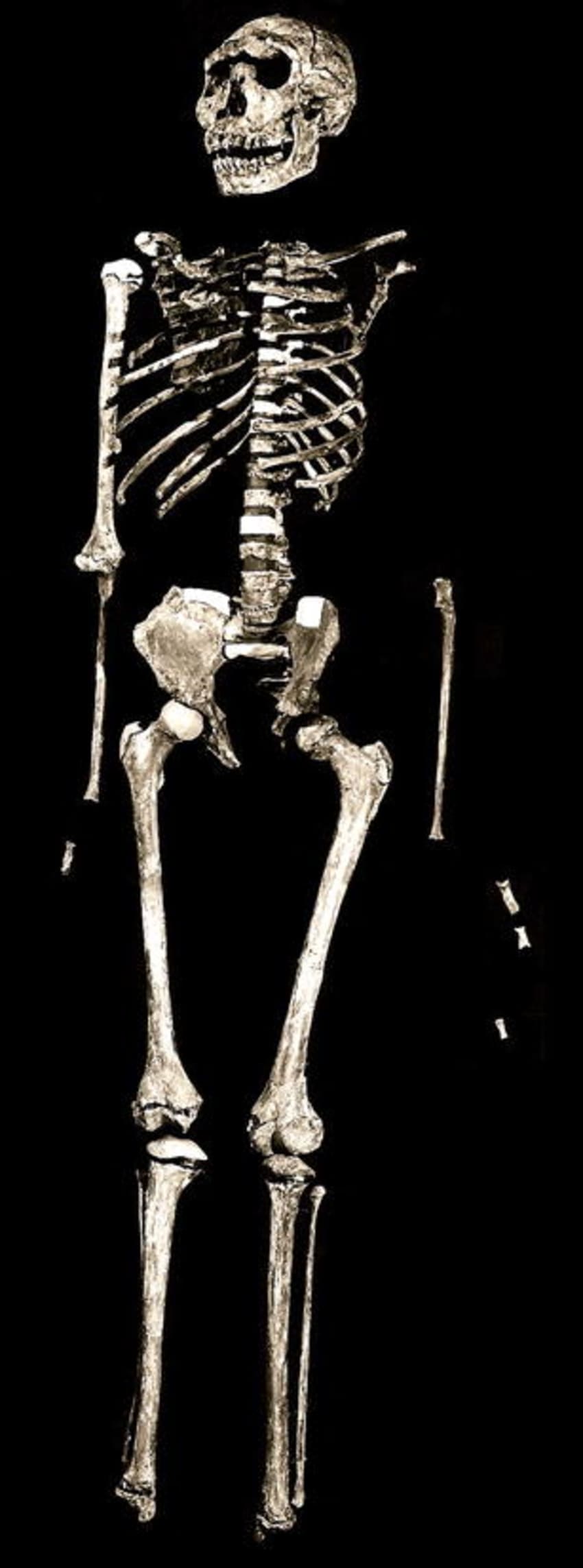
Turkana Boy (KNM-WT 15000, 1984, Kenya). A nearly complete Homo erectus juvenile at 1.6 million years, with body proportions close to modern.

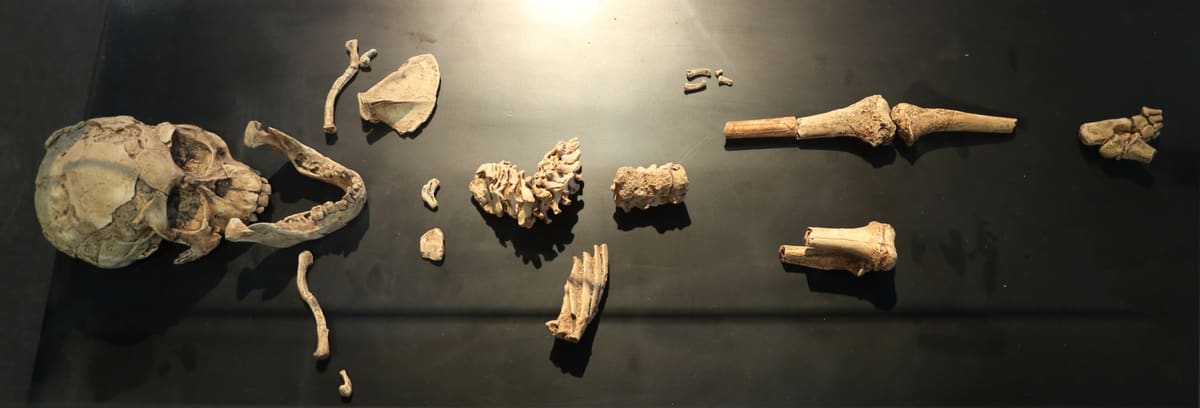
Dikika child (2000, Ethiopia). A juvenile A. afarensis at 3.3 million years preserving a hyoid bone and shoulder blades — the shoulders retain climbing adaptations while the legs are bipedal.

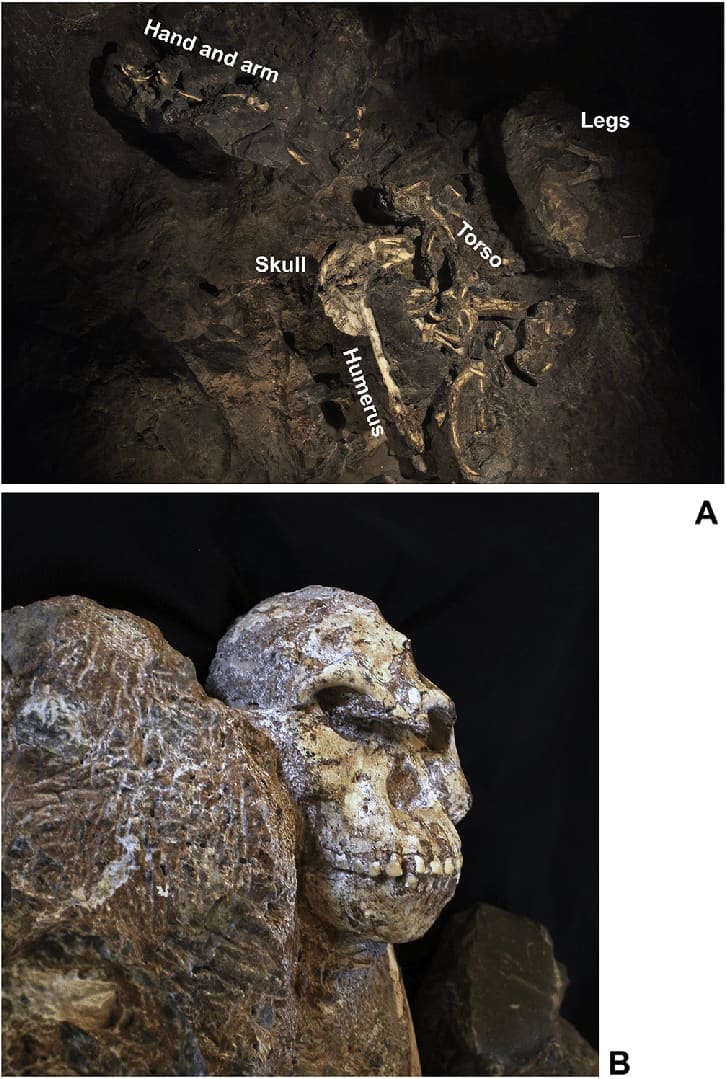
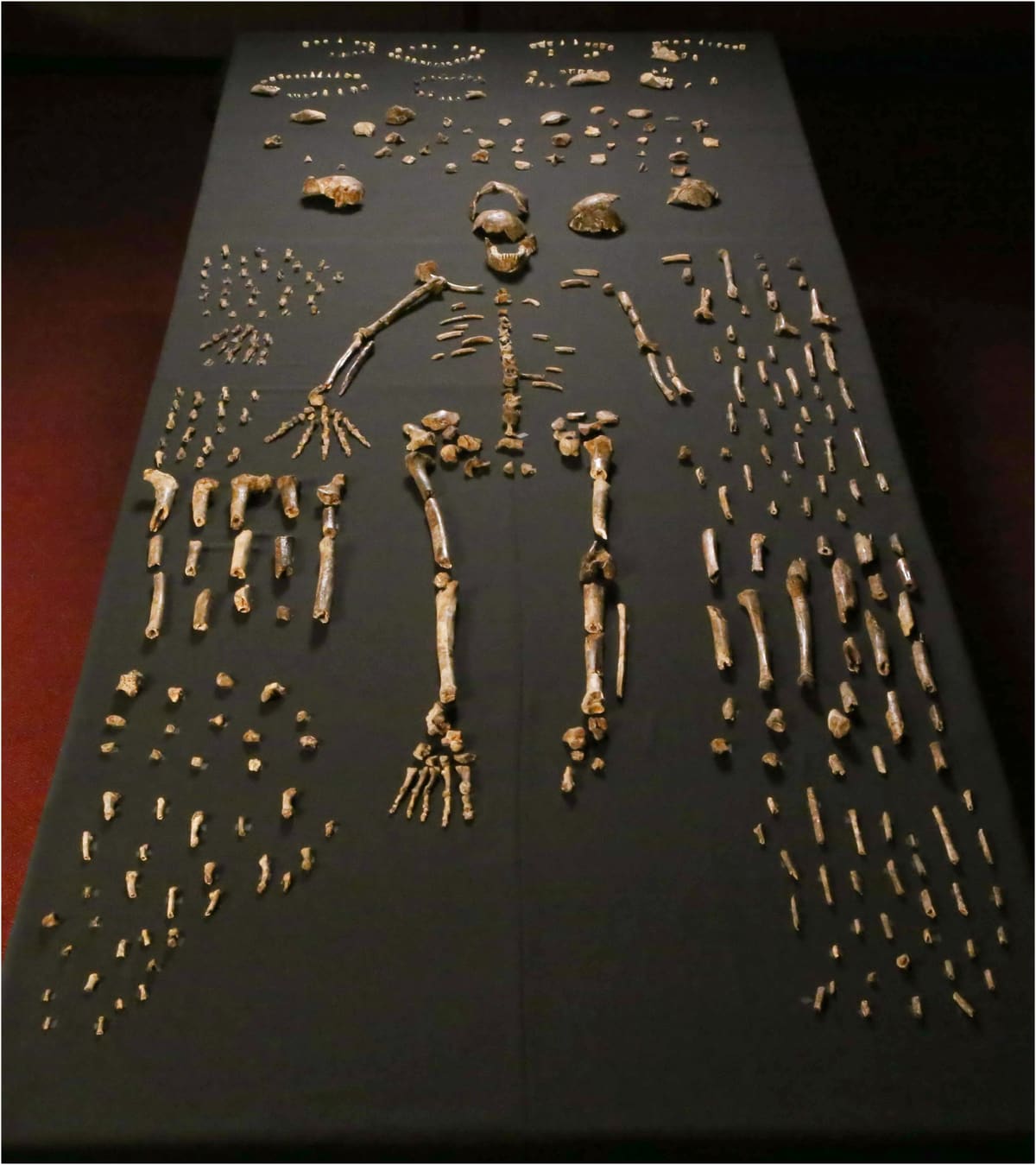
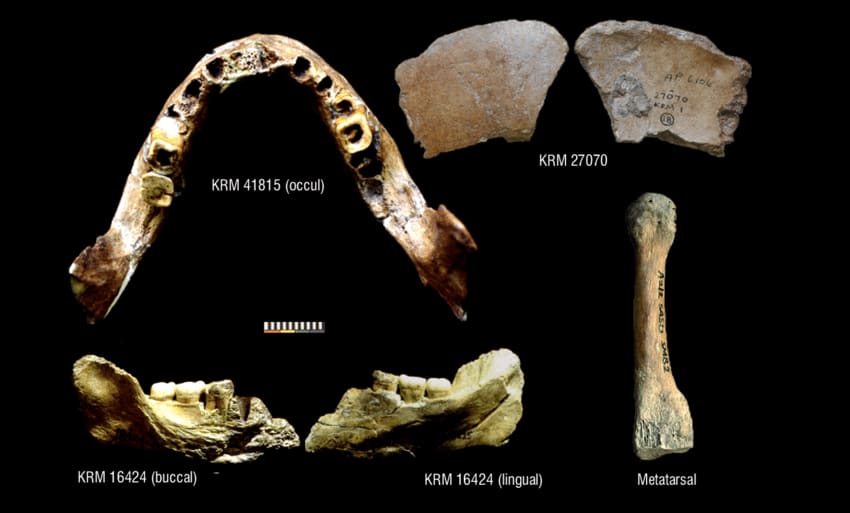
Homo naledi (2013, Rising Star cave, South Africa). Over 1,500 specimens from at least 15 individuals, dated to 335,000–236,000 years — far younger than its small brain suggested. It demonstrates that the sequence is a branching bush rather than a ladder.

Classification disagreements

Creationist literature commonly states that each specimen is either fully ape or fully human. Two lists compiled from young-earth sources show the difficulty.

Specimen Classified as ape by Classified as human by
ER 1470 (H. habilis/rudolfensis) Some AiG authors Other AiG authors, and Marvin Lubenow
ER 3733 (H. erectus) Some sources Most, as fully human
WT 15000 (Turkana Boy) Generally human
OH 62 (H. habilis) Generally ape Some sources
Sts 5 (A. africanus) Generally ape A few sources
Homo naledi Split Split

Different young-earth authors assign the same specimens to opposite categories, and the assignments have shifted as more material has been recovered. A clear division between apes and humans should not produce that pattern.

Common objections

"Lucy was just an extinct ape"

Correct in one sense. A. afarensis had an ape-sized brain, a projecting face, and long arms, and no one describes it as human.

The claim being tested is not whether Lucy was human but whether she was bipedal, since that is the trait that separates the hominin line.

The skeletal evidence is specific. The pelvis is short and bowl-shaped rather than tall and flat; the femurs angle inward so the knees sit under the body's centre of mass, which is what allows walking without swaying; and the knee joint has the valgus angle characteristic of habitual bipeds. Chimpanzees have none of these.

The Laetoli footprints independently record a bipedal gait with an arched foot at 3.66 million years.

"Piltdown, Nebraska Man, and Java Man show the field is unreliable"

The cases are real. Piltdown was a deliberate forgery accepted from 1912 to 1953. Nebraska Man was named from a single tooth in 1922 that proved to be a peccary's.

Their history is the relevant part. Piltdown was suspect for decades precisely because it fitted the accumulating evidence badly — it had a large braincase with an ape jaw, and the record was showing the opposite order. It was exposed by fluorine dating applied by scientists.

Nebraska Man was retracted by its own describer, Henry Fairfield Osborn, in 1927, five years after the announcement. It never appeared in a textbook as established, though it did appear in a newspaper illustration.

Java Man was not a fraud. Homo erectus is now represented by hundreds of specimens across Africa and Asia.

"Neanderthals were fully human, just people with rickets"

The first part is close to correct, and the position has moved toward it. Neanderthals buried their dead, used pigment, made tools and adhesives, and interbred with modern humans — their DNA is present in living people. See Ancient DNA.

The rickets explanation, proposed by Rudolf Virchow in the nineteenth century, does not survive the sample. Rickets is a childhood vitamin D deficiency producing bone deformation, and it does not produce a consistent skull shape, occipital bun, or brow ridge across hundreds of individuals in different regions over 300,000 years.

Genomes settle it. Neanderthals differ consistently from modern humans in ways diet cannot produce, and their lineage separates from ours around 600,000 years ago.

"There are no transitional forms — each species appears fully formed"

The species boundaries are the artefact here. Palaeontologists divide a continuous record into named species for practical reasons, which creates the appearance of discrete forms.

The disagreement over classification is the evidence against the objection. Homo habilis has been argued into and out of Homo repeatedly; A. sediba and H. naledi both carry mixtures of traits that resist assignment. Specimens that are difficult to classify are what an intermediate looks like.

The trait-by-trait sequence is also clear: bipedalism at about 4 million years, stone tools at 3.3 million, brain expansion beginning around 2 million, modern body proportions at 1.6 million.

"Fossils are fragmentary and reconstructions are guesswork"

Fair for some specimens. Sahelanthropus is known mainly from one distorted cranium, and early reconstructions of several species were revised.

Not all are fragmentary. Turkana Boy is a nearly complete skeleton, Lucy is about 40%, and H. naledi is represented by over 1,500 elements from multiple individuals.

The published record also includes the raw material. Casts are distributed to institutions, CT scans are archived, and reconstructions have been publicly revised when new material contradicted them — which is how the disagreements above became visible.

What the evidence shows

The fossil record documents a sequence in which bipedalism appears first, at roughly 4 million years, followed by stone tools, then brain expansion, then modern body proportions.

The record is not a single line. H. naledi, A. sediba, and the Denisovans show branches overlapping in time, and several lineages ended without descendants.

The clearest indication that the boundary between ape and human is not sharp is that those who assert it is cannot agree where it falls, and assign the same specimens to opposite categories.

Genetic evidence bearing on the same question is in Chromosome 2, Endogenous Retroviruses, and Ancient DNA.

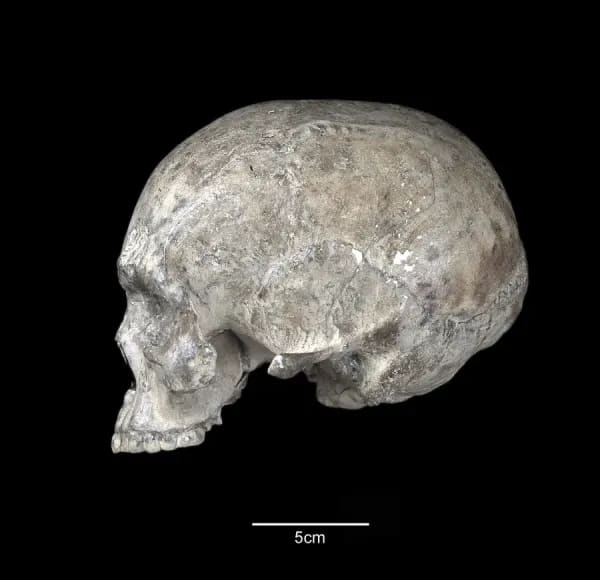
Representative photographs for each catalogued specimen referenced above, grouped by the same period bands.

Earliest Hominins
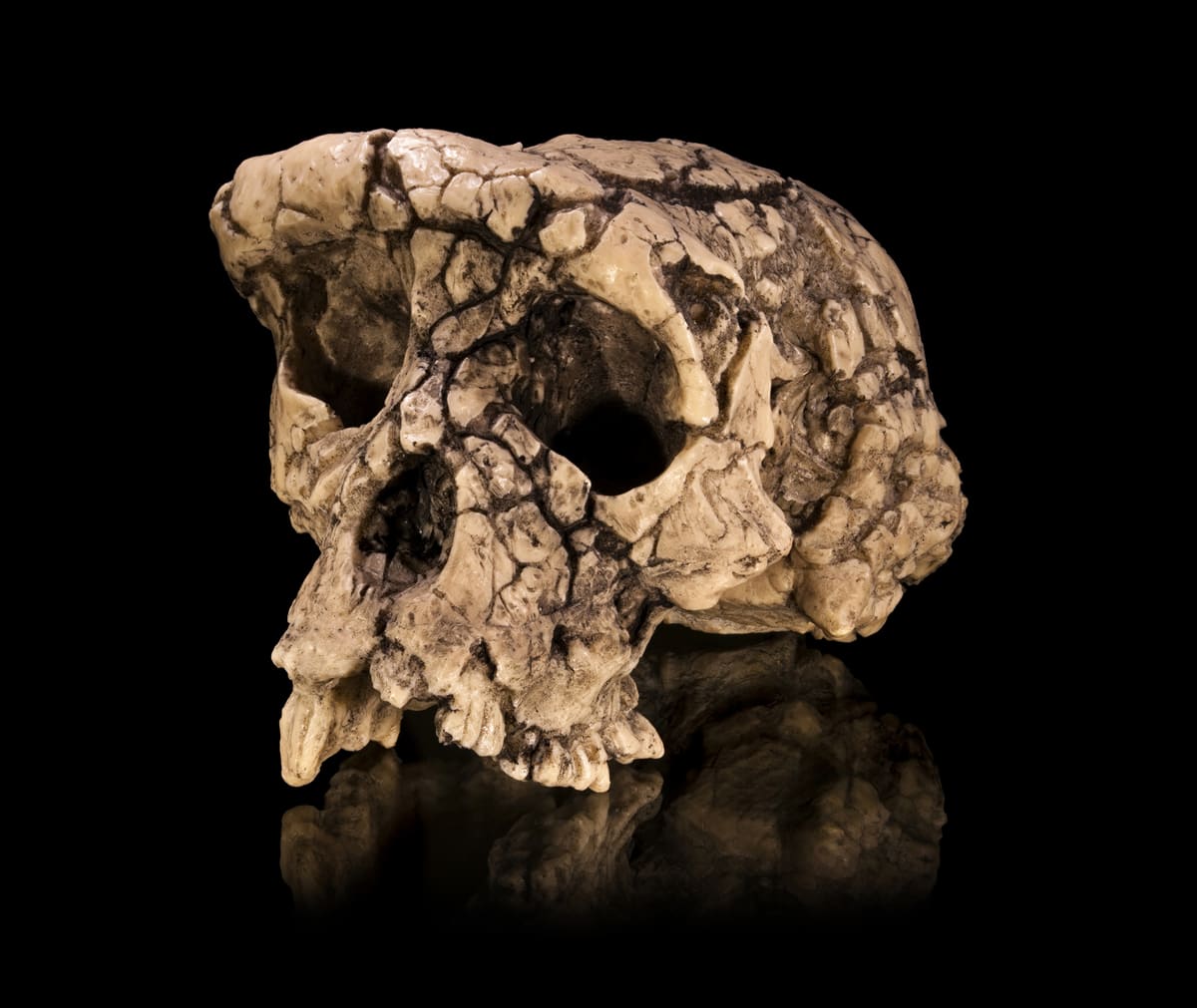
TM 266-01-060-1 "Toumaï", Sahelanthropus tchadensis
TM 266-01-060-1 "Toumaï"Sahelanthropus tchadensis, 7.0 ± 0.2 Ma, Toros-Menalla, Chad. Brunet et al. 2002, Nature 418:145–151. DOI: 10.1038/nature00879
BAR 1002'00, Orrorin tugenensis
BAR 1002'00Orrorin tugenensis, 5.9 ± 0.2 Ma, Tugen Hills, Kenya. Senut et al. 2001, C.R. Acad. Sci. 332:137–144. DOI: 10.1016/S1251-8050(01)01529-4
ALA-VP-2/10 (holotype), Ardipithecus kadabba
ALA-VP-2/10 (holotype)Ardipithecus kadabba, 5.66 ± 0.12 Ma, Middle Awash, Ethiopia. Haile-Selassie 2001, Nature 412:178–181. DOI: 10.1038/35084063
ARA-VP-6/500 "Ardi", Ardipithecus ramidus
ARA-VP-6/500 "Ardi"Ardipithecus ramidus, 4.4 Ma, Aramis, Ethiopia. White et al. 2009, Science 326:64, 75–86. DOI: 10.1126/science.1175802

Australopithecus

KNM-KP 29281 (holotype), Australopithecus anamensis
KNM-KP 29281 (holotype)Australopithecus anamensis, 4.05 ± 0.15 Ma, Kanapoi, Kenya. Leakey et al. 1995, Nature 376:565–571. DOI: 10.1038/376565a0
MRD-VP-1/1, Australopithecus anamensis
MRD-VP-1/1Australopithecus anamensis, 3.8 Ma, Woranso-Mille, Ethiopia. Haile-Selassie et al. 2019, Nature 573:214–221. DOI: 10.1038/s41586-019-1513-8
LH 4 (holotype), Australopithecus afarensis
LH 4 (holotype)Australopithecus afarensis, 3.65 ± 0.05 Ma, Laetoli, Tanzania. Johanson et al. 1978, Kirtlandia 28:1–14
AL 288-1 "Lucy", Australopithecus afarensis
AL 288-1 "Lucy"Australopithecus afarensis, 3.2 Ma, Hadar, Ethiopia. Johanson & Taieb 1976, Nature 260:293–297. DOI: 10.1038/260293a0
DIK-1-1 "Selam", Australopithecus afarensis
DIK-1-1 "Selam"Australopithecus afarensis, 3.3 Ma, Dikika, Ethiopia. Alemseged et al. 2006, Nature 443:296–301. DOI: 10.1038/nature05047
AL 444-2, Australopithecus afarensis
AL 444-2Australopithecus afarensis, 3.0 Ma, Hadar, Ethiopia. Kimbel et al. 1994, Nature 368:449–451. DOI: 10.1038/368449a0
AL 333 "First Family", Australopithecus afarensis
AL 333 "First Family"Australopithecus afarensis, 3.20 ± 0.02 Ma, Hadar, Ethiopia. Johanson et al. 1982, Am. J. Phys. Anthropol. 57:373–402
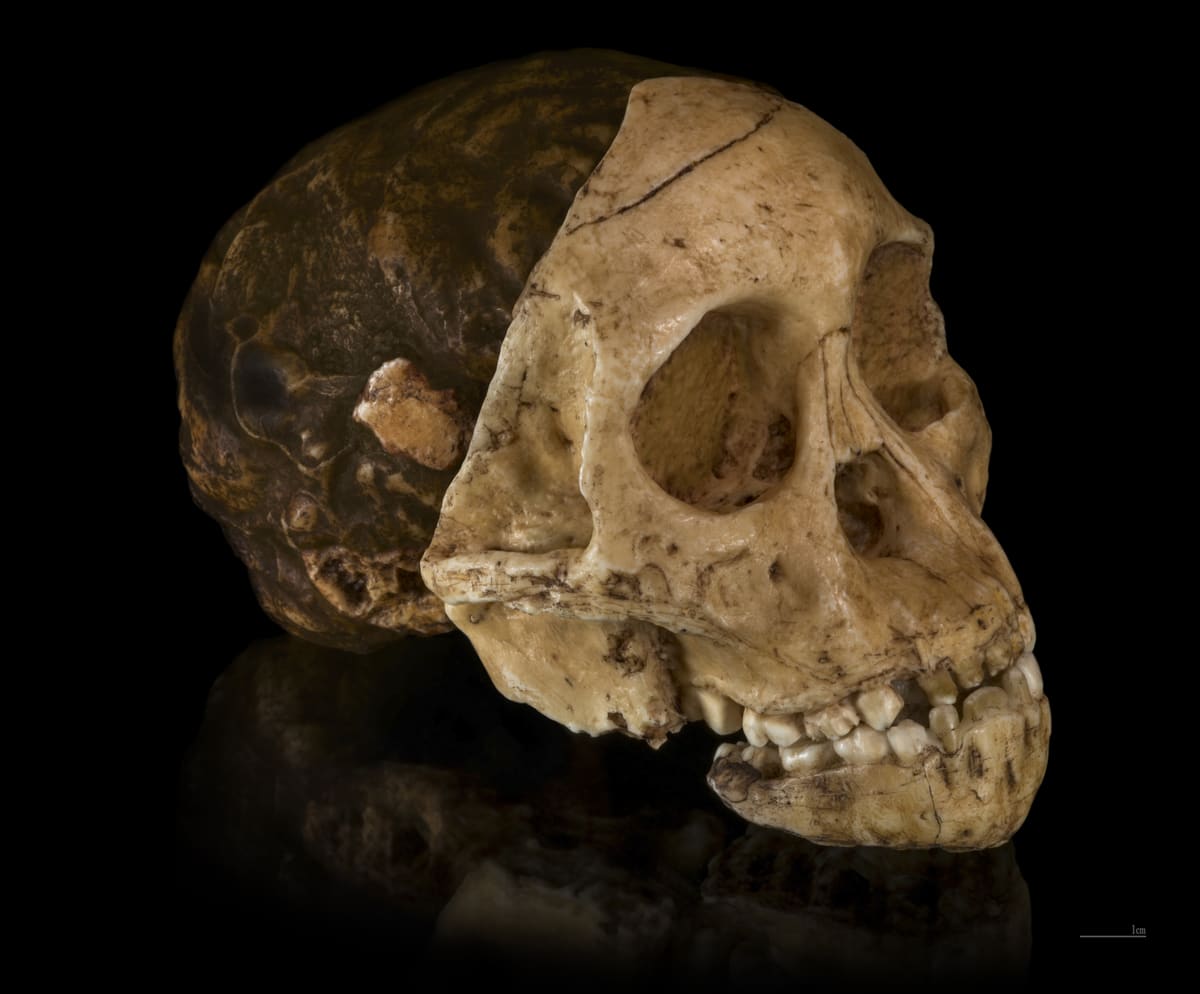
Taung Child (holotype), Australopithecus africanus
Taung Child (holotype)Australopithecus africanus, ~2.8 Ma, Taung, South Africa. Dart 1925, Nature 115:195–199. DOI: 10.1038/115195a0
Sts 5 "Mrs. Ples", Australopithecus africanus
Sts 5 "Mrs. Ples"Australopithecus africanus, ~2.5 Ma, Sterkfontein, South Africa. Broom 1947, Nature 159:672. DOI: 10.1038/159672a0
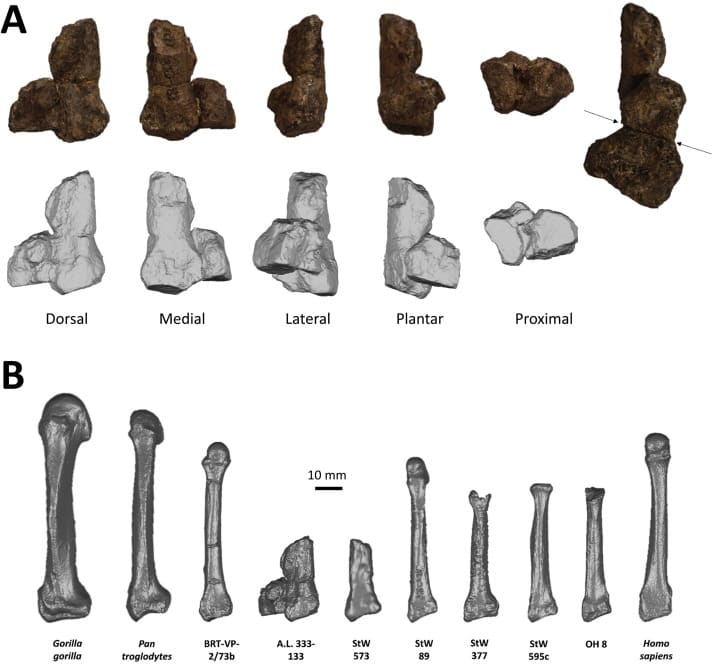
StW 573 "Little Foot", Australopithecus africanus
StW 573 "Little Foot"Australopithecus africanus, 3.67 ± 0.16 Ma, Sterkfontein, South Africa. Clarke & Kuman 2019, J. Hum. Evol. 134:102634. DOI: 10.1016/j.jhevol.2019.06.005
BOU-VP-12/130 (holotype), Australopithecus garhi
BOU-VP-12/130 (holotype)Australopithecus garhi, 2.5 Ma, Bouri, Ethiopia. Asfaw et al. 1999, Science 284:629–635. DOI: 10.1126/science.284.5414.629
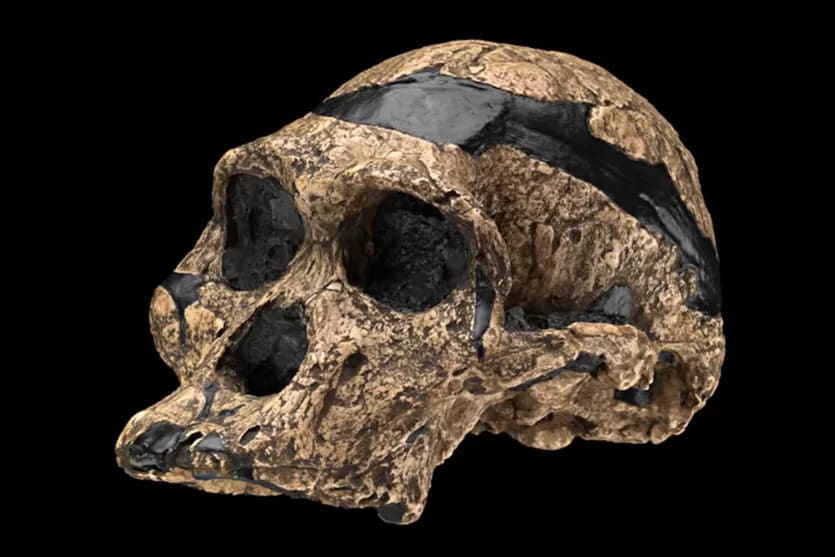
MH1 "Karabo" (holotype), Australopithecus sediba
MH1 "Karabo" (holotype)Australopithecus sediba, 1.98 Ma, Malapa, South Africa. Berger et al. 2010, Science 328:195–204. DOI: 10.1126/science.1184944
MH2, Australopithecus sediba
MH2Australopithecus sediba, 1.98 Ma, Malapa, South Africa. Kivell et al. 2011, Science 333:1411–1417. DOI: 10.1126/science.1202625
BRT-VP-3/1 (holotype), Australopithecus deyiremeda
BRT-VP-3/1 (holotype)Australopithecus deyiremeda, 3.4 ± 0.1 Ma, Woranso-Mille, Ethiopia. Haile-Selassie et al. 2015, Nature 521:483–488. DOI: 10.1038/nature14448

Paranthropus & Kenyanthropus
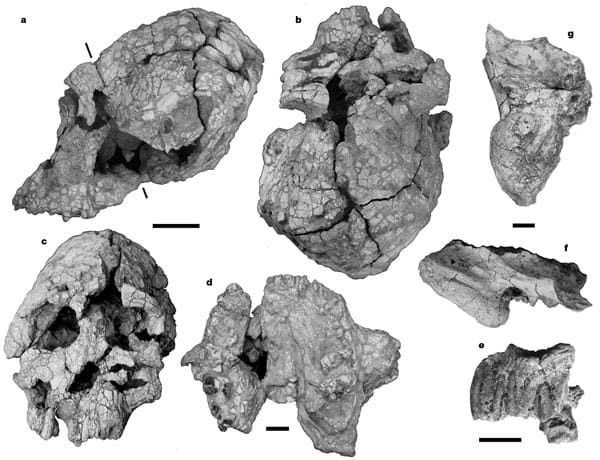
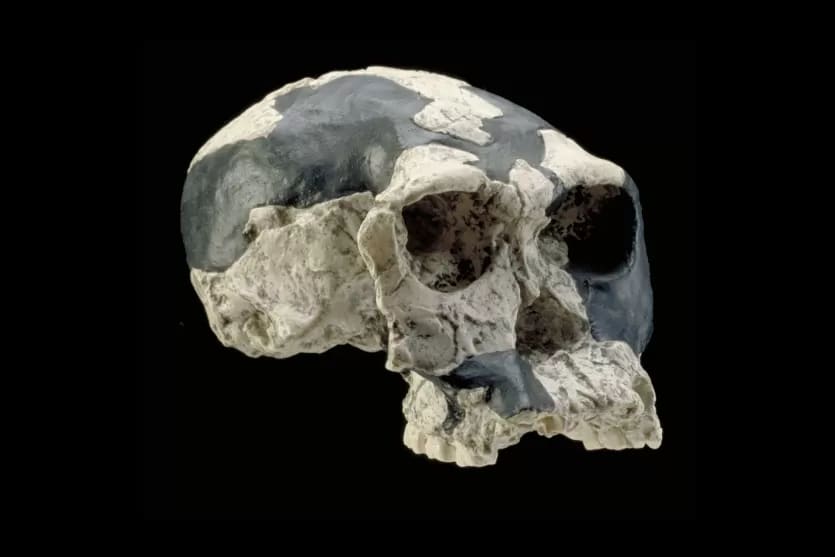
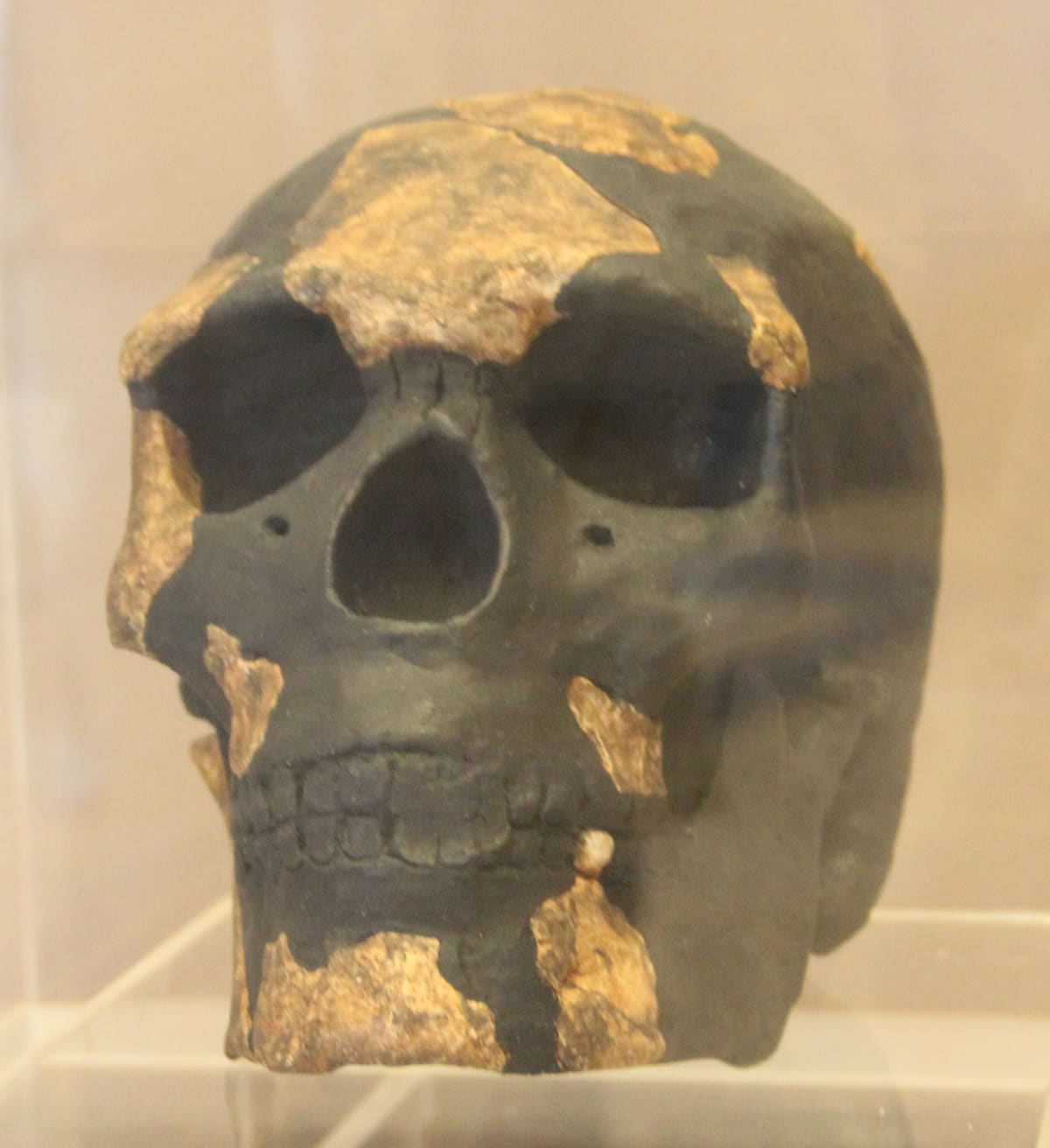
KNM-WT 40000 (holotype), Kenyanthropus platyops
KNM-WT 40000 (holotype)Kenyanthropus platyops, 3.5 Ma, Lomekwi, Kenya. Leakey et al. 2001, Nature 410:433–440. DOI: 10.1038/35068500
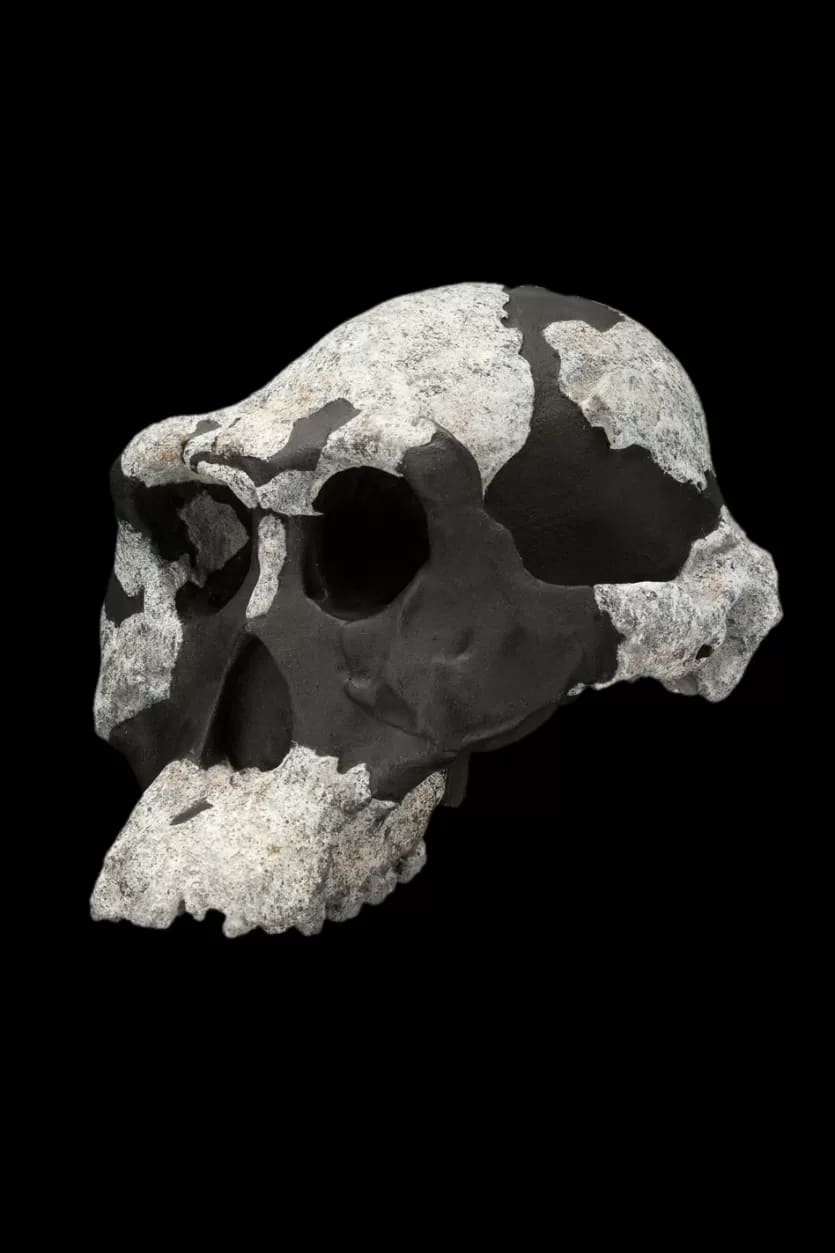
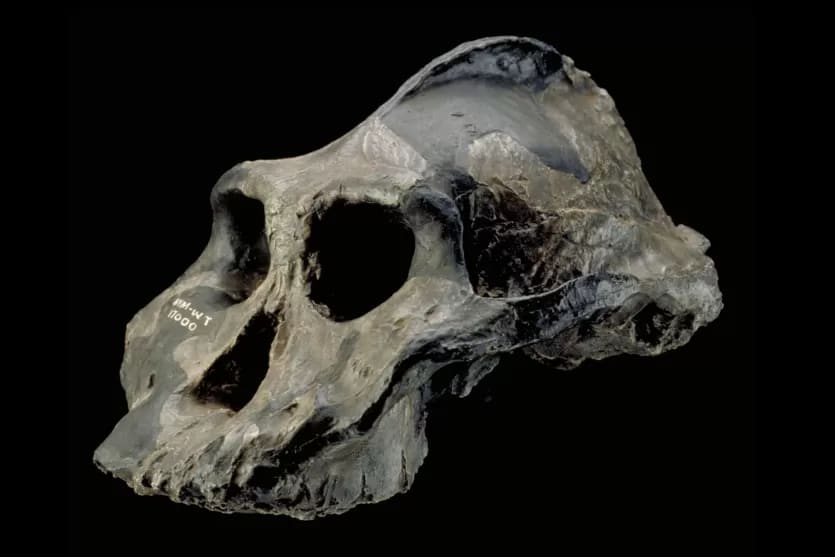
KNM-WT 17000 "Black Skull", Paranthropus aethiopicus
KNM-WT 17000 "Black Skull"Paranthropus aethiopicus, 2.5 Ma, West Turkana, Kenya. Walker et al. 1986, Nature 322:517–522. DOI: 10.1038/322517a0
OH 5 "Zinj/Nutcracker Man" (holotype), Paranthropus boisei
OH 5 "Zinj/Nutcracker Man" (holotype)Paranthropus boisei, 1.78 ± 0.03 Ma, Olduvai, Tanzania. Leakey 1959, Nature 184:491–494. DOI: 10.1038/184491a0
KNM-ER 406, Paranthropus boisei
KNM-ER 406Paranthropus boisei, 1.7 Ma, Koobi Fora, Kenya. Leakey 1970, Nature 226:223–224. DOI: 10.1038/226223a0
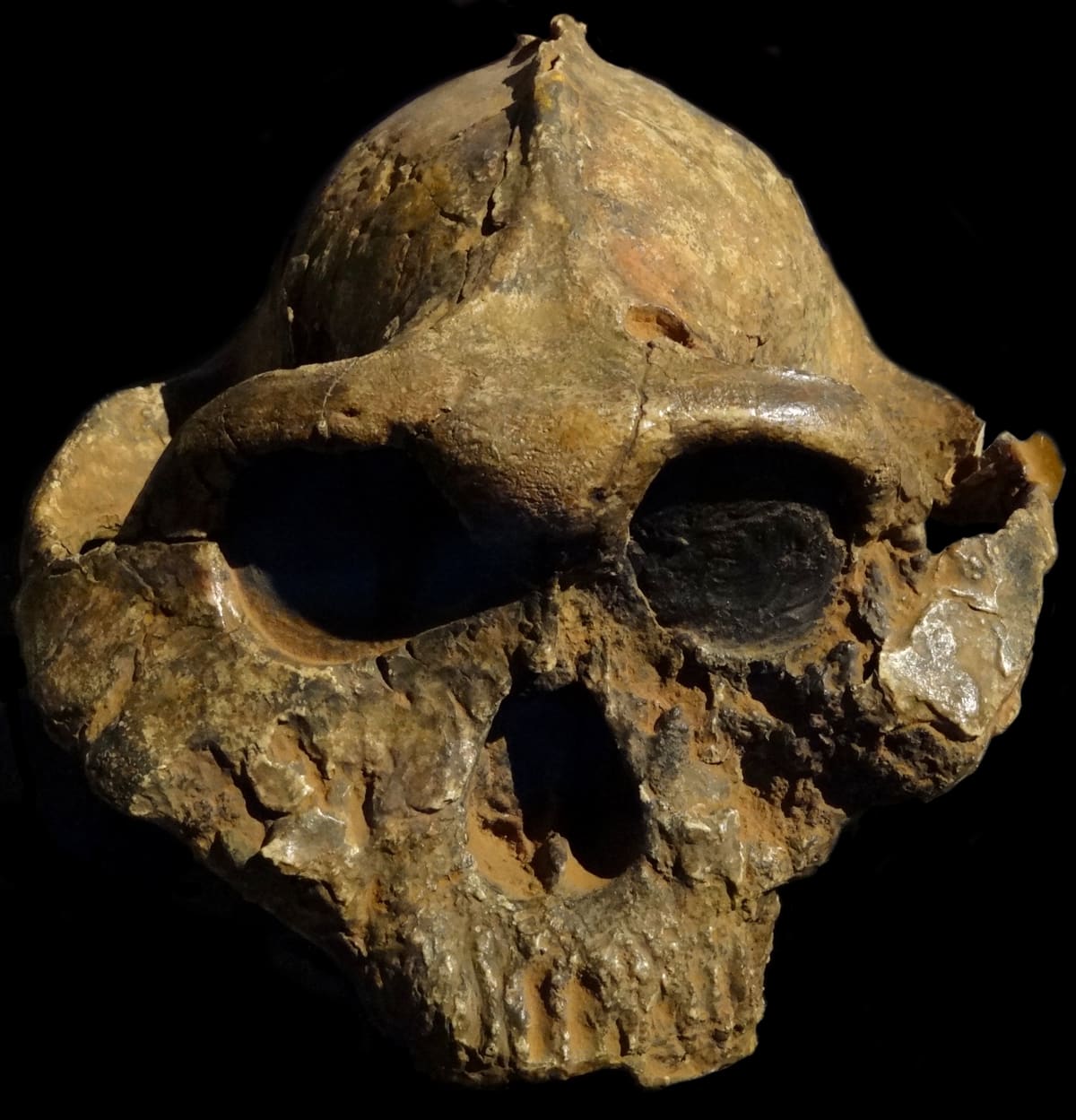
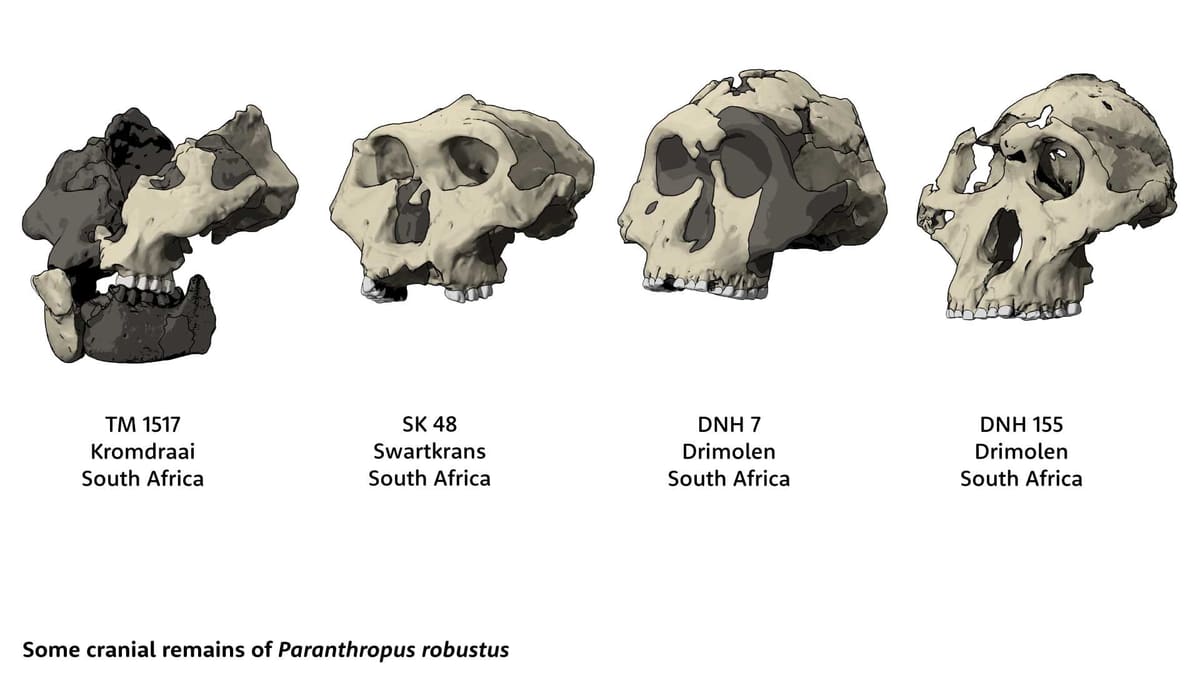
TM 1517 (holotype), Paranthropus robustus
TM 1517 (holotype)Paranthropus robustus, 1.83 ± 0.18 Ma, Kromdraai, South Africa. Broom 1938, Nature 142:377–379
SK 48, Paranthropus robustus
SK 48Paranthropus robustus, 1.65 ± 0.15 Ma, Swartkrans, South Africa. Broom & Robinson 1952, Transvaal Mus. Mem. 6:1–123
DNH 7, Paranthropus robustus
DNH 7Paranthropus robustus, ~1.7 Ma, Drimolen, South Africa. Keyser 2000, S. Afr. J. Sci. 96:189–197

Early Homo

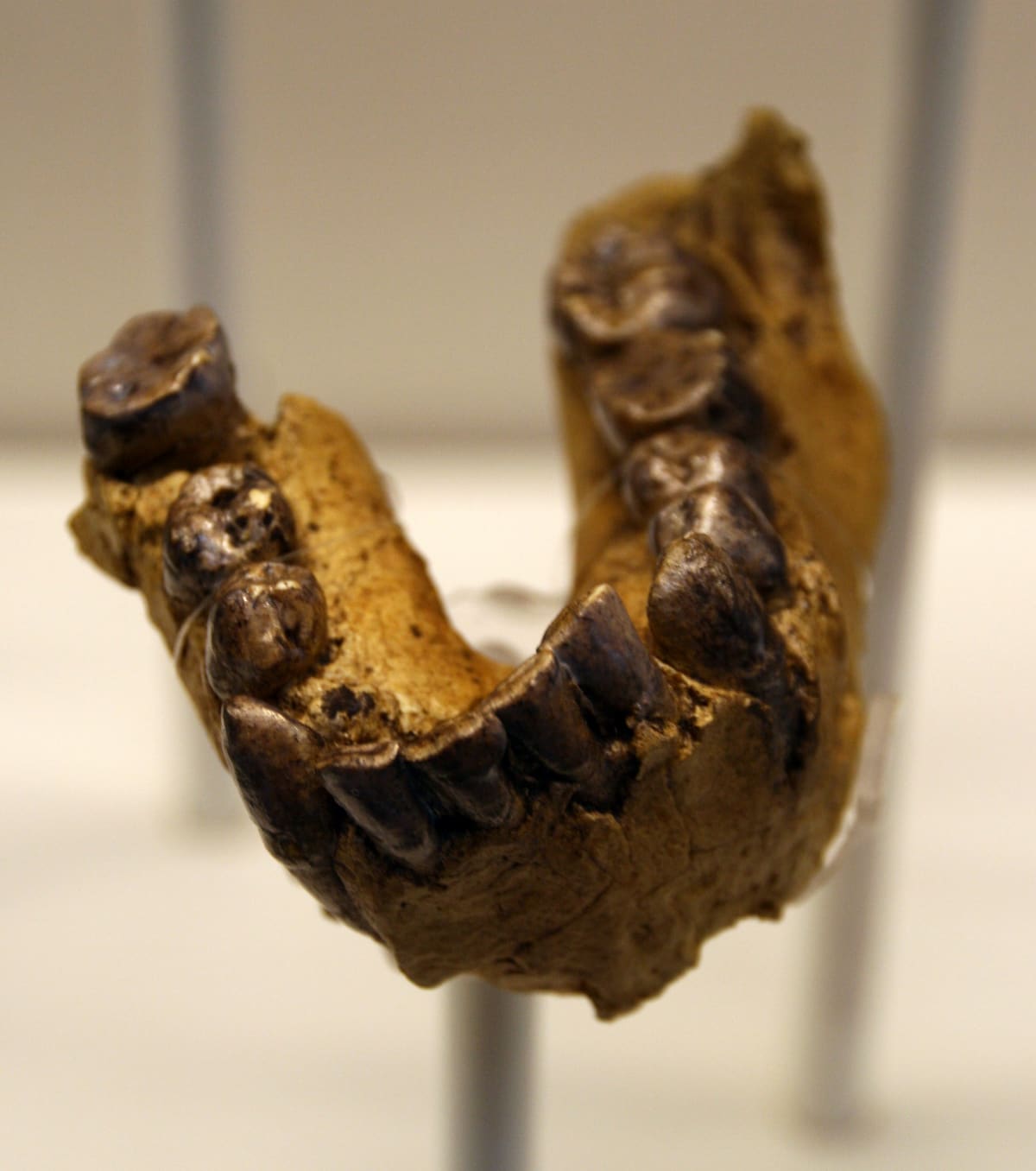
OH 7 "Jonny's Child" (holotype), Homo habilis
OH 7 "Jonny's Child" (holotype)Homo habilis, 1.78 ± 0.03 Ma, Olduvai, Tanzania. Leakey et al. 1964, Nature 202:7–9. DOI: 10.1038/202007a0
OH 24 "Twiggy", Homo habilis
OH 24 "Twiggy"Homo habilis, ~1.8 Ma, Olduvai, Tanzania. Leakey et al. 1971, Nature 232:308–312
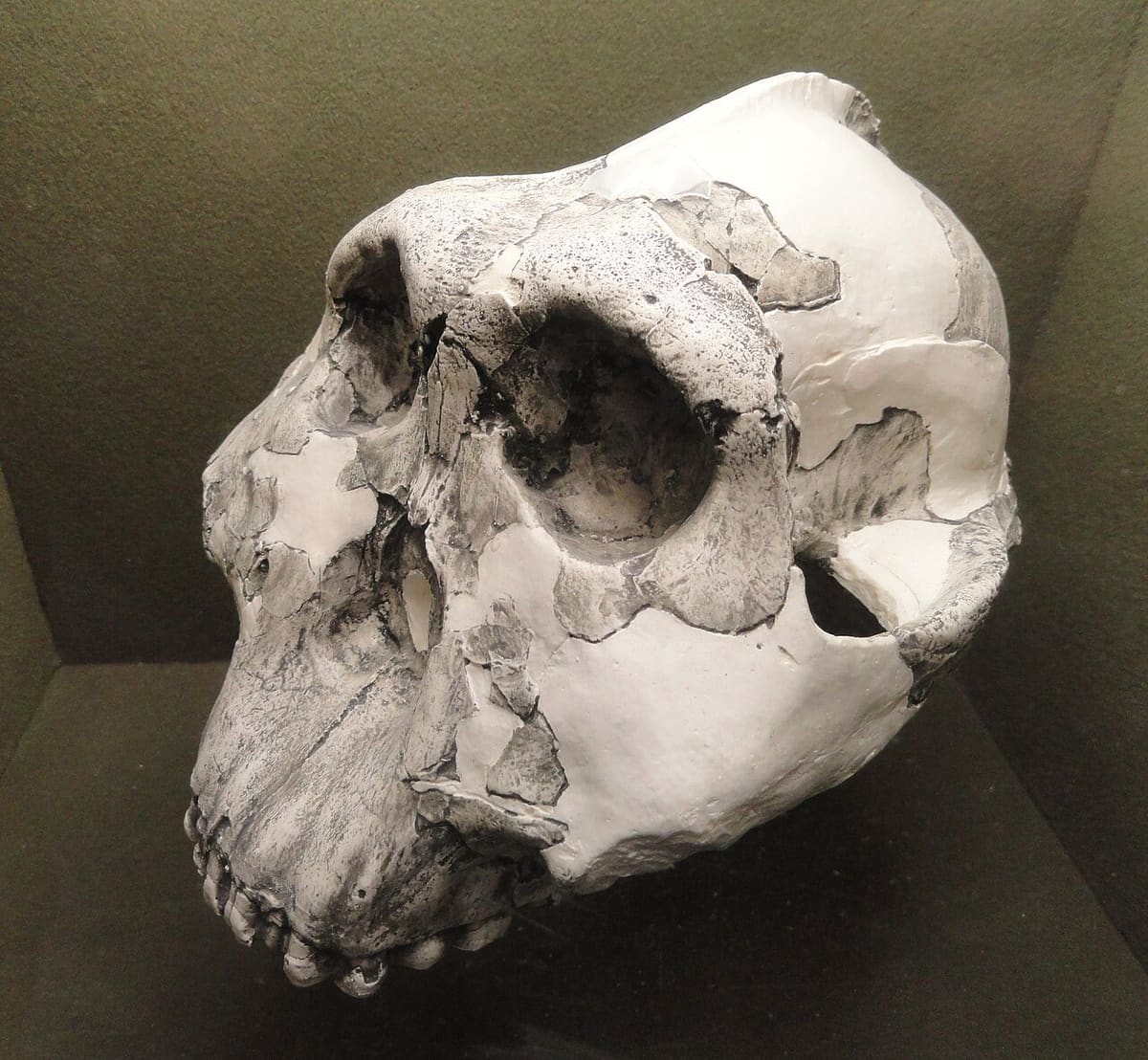
KNM-ER 1813, Homo habilis
KNM-ER 1813Homo habilis, ~1.9 Ma, Koobi Fora, Kenya. Leakey 1974, Nature 248:653–656
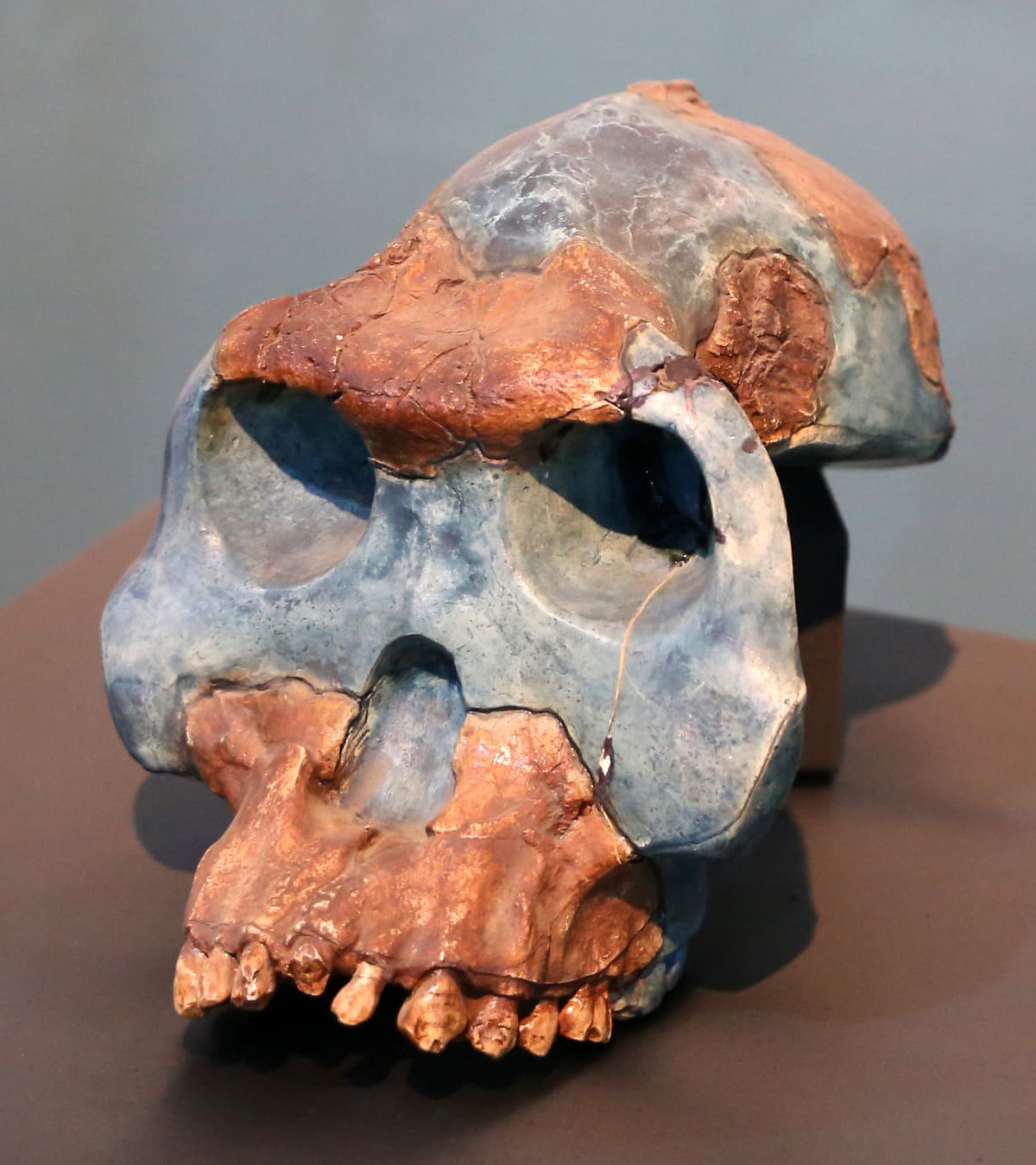
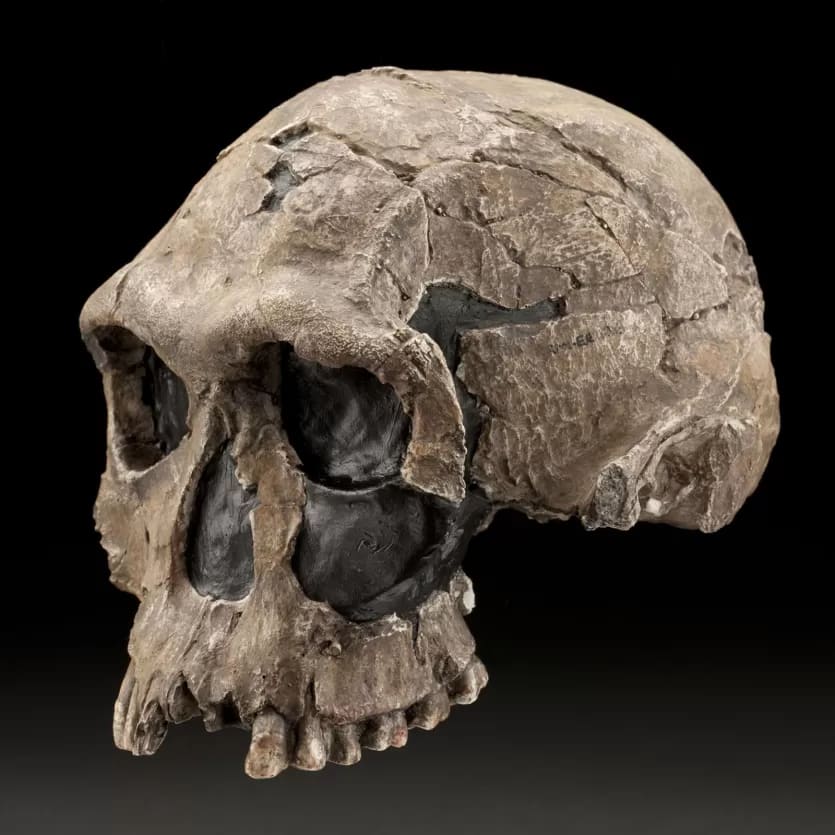
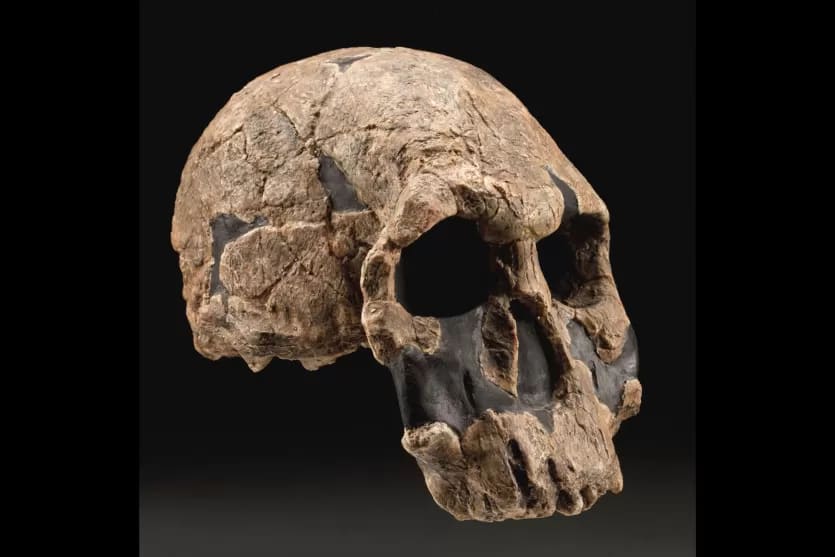
KNM-ER 1470 (lectotype), Homo rudolfensis
KNM-ER 1470 (lectotype)Homo rudolfensis, 1.95 ± 0.05 Ma, Koobi Fora, Kenya. Leakey 1973, Nature 242:447–450. DOI: 10.1038/242447a0
KNM-WT 15000 "Turkana Boy", Homo erectus/ergaster
KNM-WT 15000 "Turkana Boy"Homo erectus/ergaster, 1.55 ± 0.05 Ma, Nariokotome, Kenya. Brown et al. 1985, Nature 316:788–792. DOI: 10.1038/316788a0
Trinil 2 (holotype), Homo erectus
Trinil 2 (holotype)Homo erectus, ~0.9 Ma, Trinil, Java, Indonesia. Dubois 1894, Pithecanthropus erectus. Batavia: Landsdrukkerij
Sangiran 17, Homo erectus
Sangiran 17Homo erectus, 1.0 ± 0.2 Ma, Sangiran, Java, Indonesia. Sartono 1971, Proc. Kon. Ned. Akad. Wet. B 74:209–217
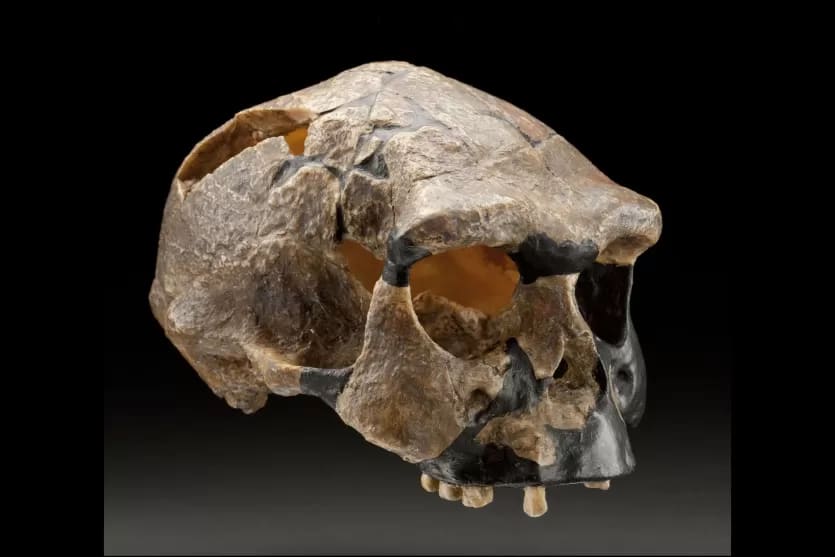
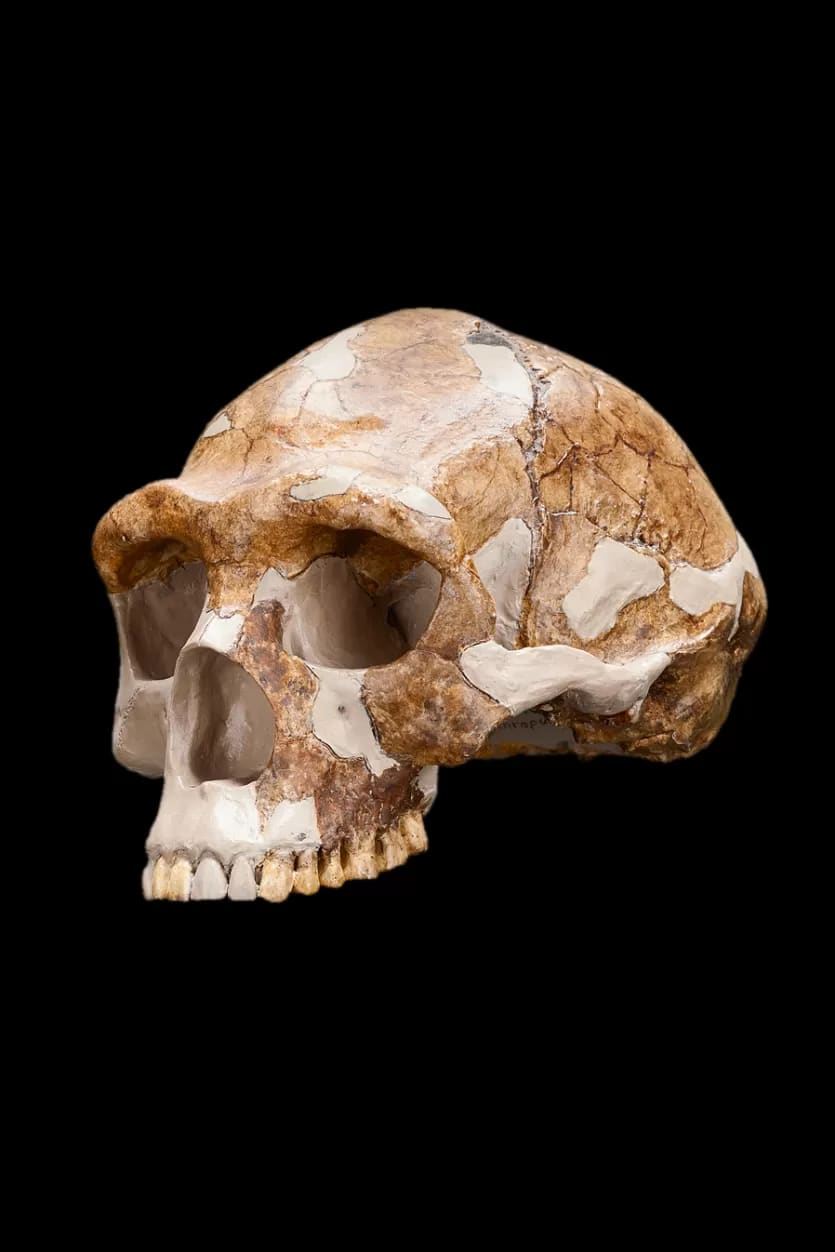
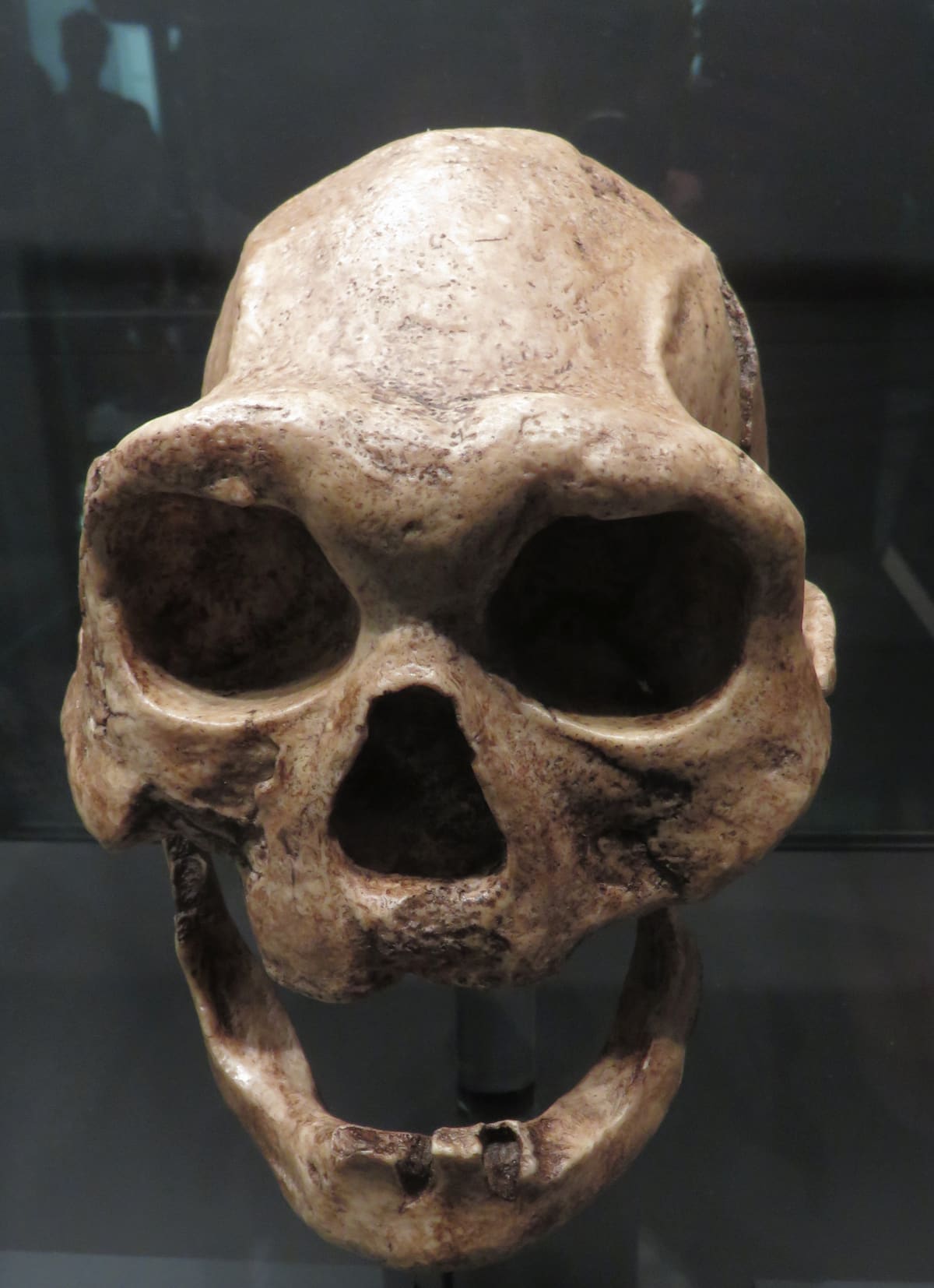
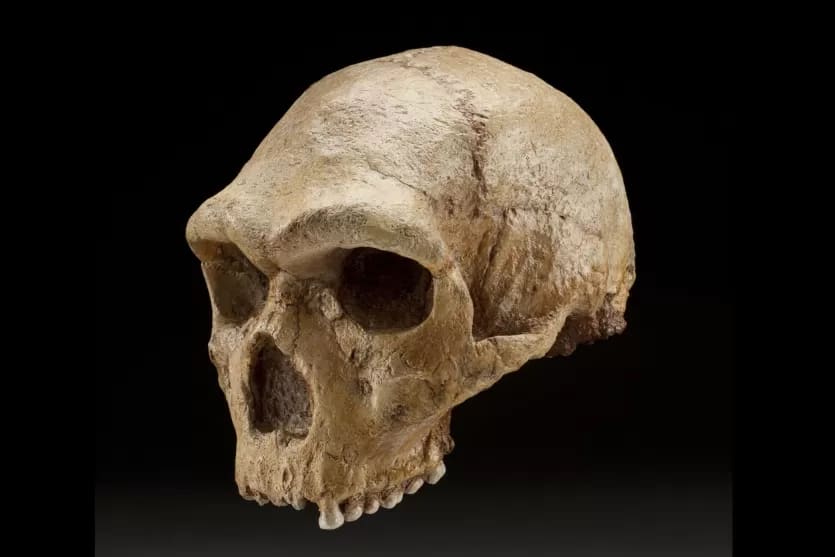
Zhoukoudian (Peking Man), Homo erectus
Zhoukoudian (Peking Man)Homo erectus, 770 ± 80 ka, Zhoukoudian, China. Weidenreich 1943, Palaeontologia Sinica. New Series D 10
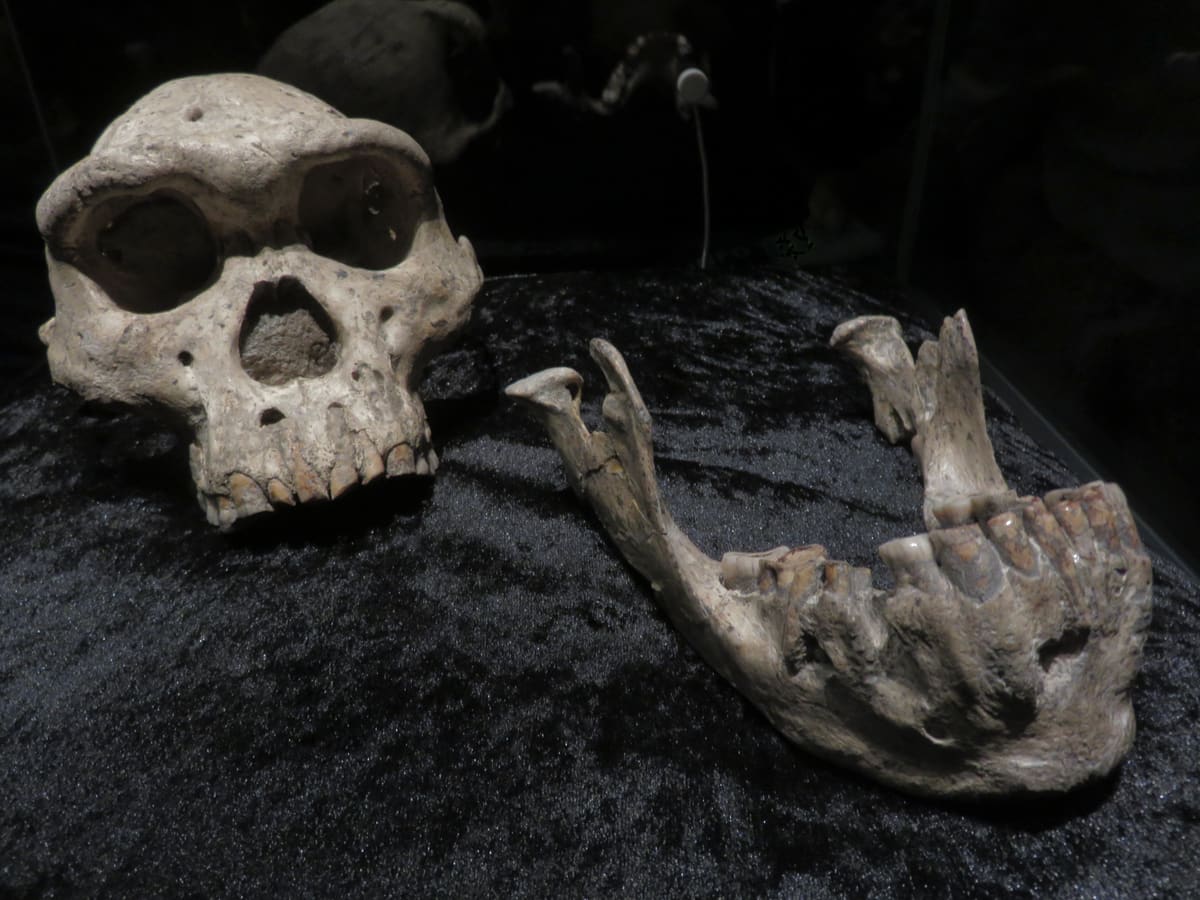
Dmanisi Skull 5 (D4500/D2600), Homo erectus georgicus
Dmanisi Skull 5 (D4500/D2600)Homo erectus georgicus, 1.77 Ma, Dmanisi, Georgia. Lordkipanidze et al. 2013, Science 342:326–331. DOI: 10.1126/science.1238484
Dmanisi Skull 4 (D3444/D3900), Homo erectus georgicus
Dmanisi Skull 4 (D3444/D3900)Homo erectus georgicus, 1.77 Ma, Dmanisi, Georgia. Lordkipanidze et al. 2006, Nature 449:305–310
Bodo, Homo heidelbergensis
BodoHomo heidelbergensis, 600 ka, Bodo d'Ar, Ethiopia. Rightmire 1996, Am. J. Phys. Anthropol. 100:135–153
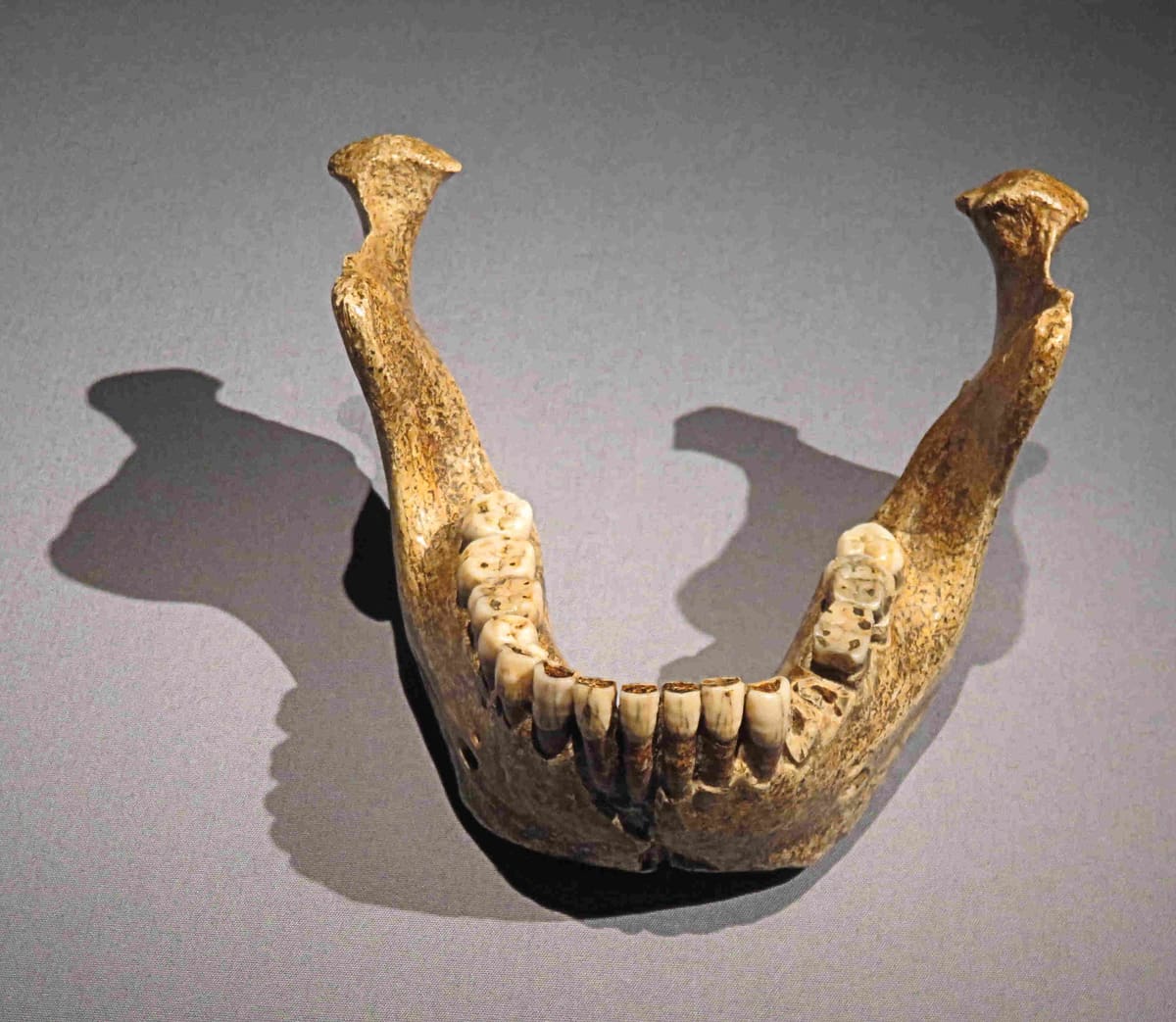
Mauer 1 (holotype), Homo heidelbergensis
Mauer 1 (holotype)Homo heidelbergensis, 609 ± 40 ka, Mauer, Germany. Schoetensack 1908, Der Unterkiefer des Homo heidelbergensis
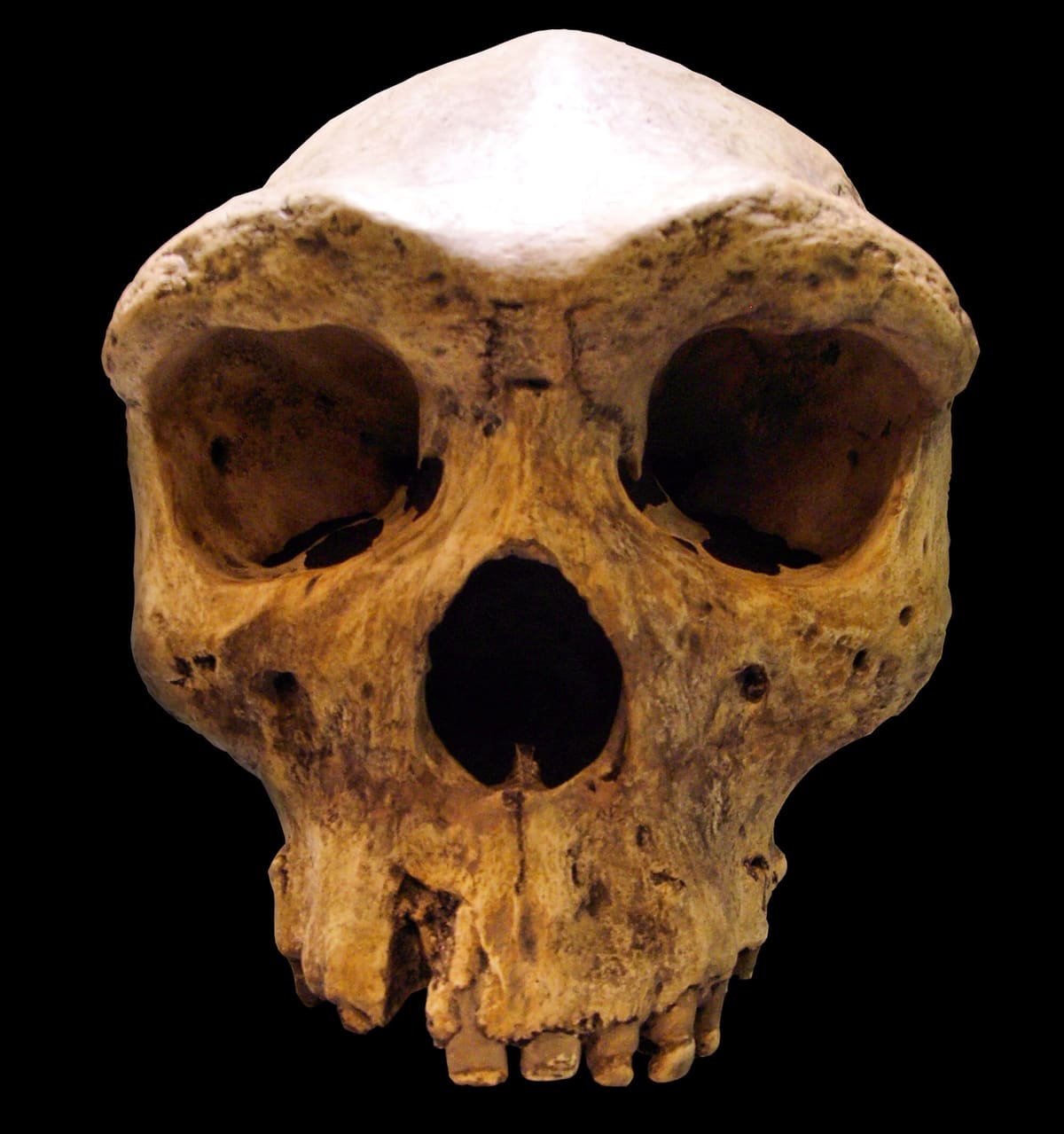
Kabwe 1 "Broken Hill", Homo heidelbergensis
Kabwe 1 "Broken Hill"Homo heidelbergensis, 299 ± 25 ka, Kabwe, Zambia. Grün et al. 2020, Nature 580:511–515. DOI: 10.1038/s41586-020-2165-4
Petralona, Homo heidelbergensis
PetralonaHomo heidelbergensis, ~250 ± 100 ka, Petralona, Greece. Stringer et al. 1979, J. Archaeol. Sci. 6:235–253
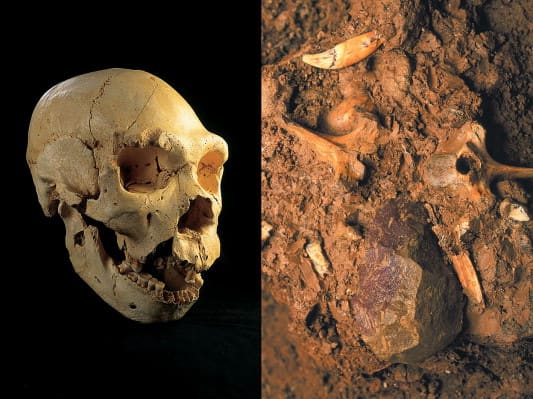
Sima de los Huesos (SH), Homo heidelbergensis
Sima de los Huesos (SH)Homo heidelbergensis, 430 ka, Atapuerca, Spain. Arsuaga et al. 2014, Science 344:1358–1363. DOI: 10.1126/science.1253958

Late Pleistocene
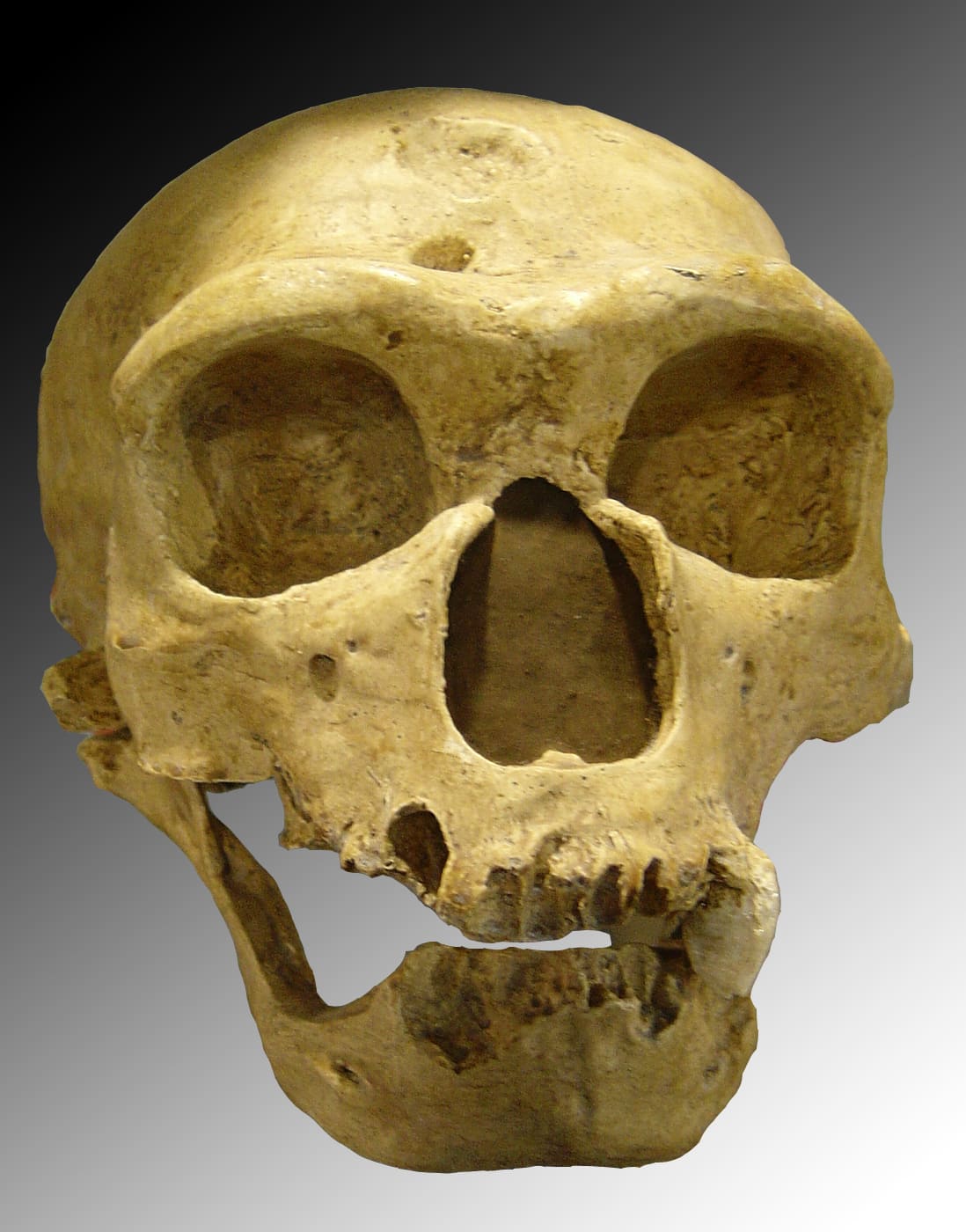
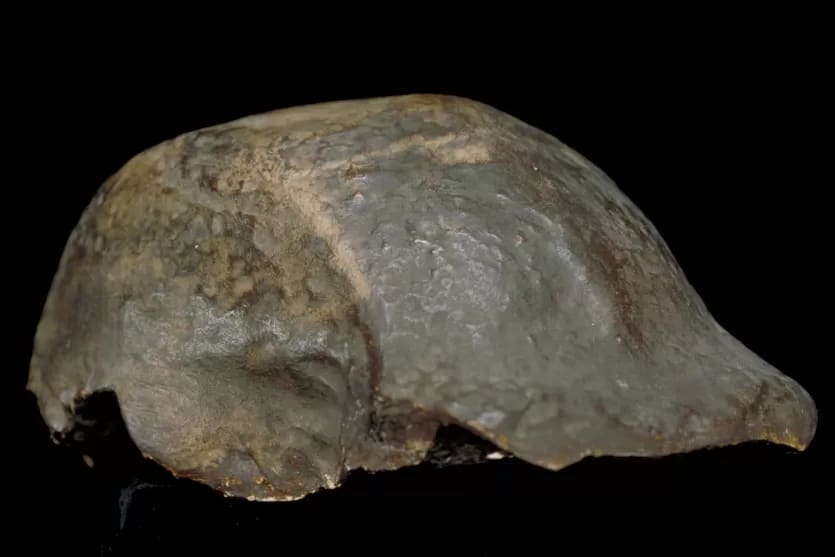
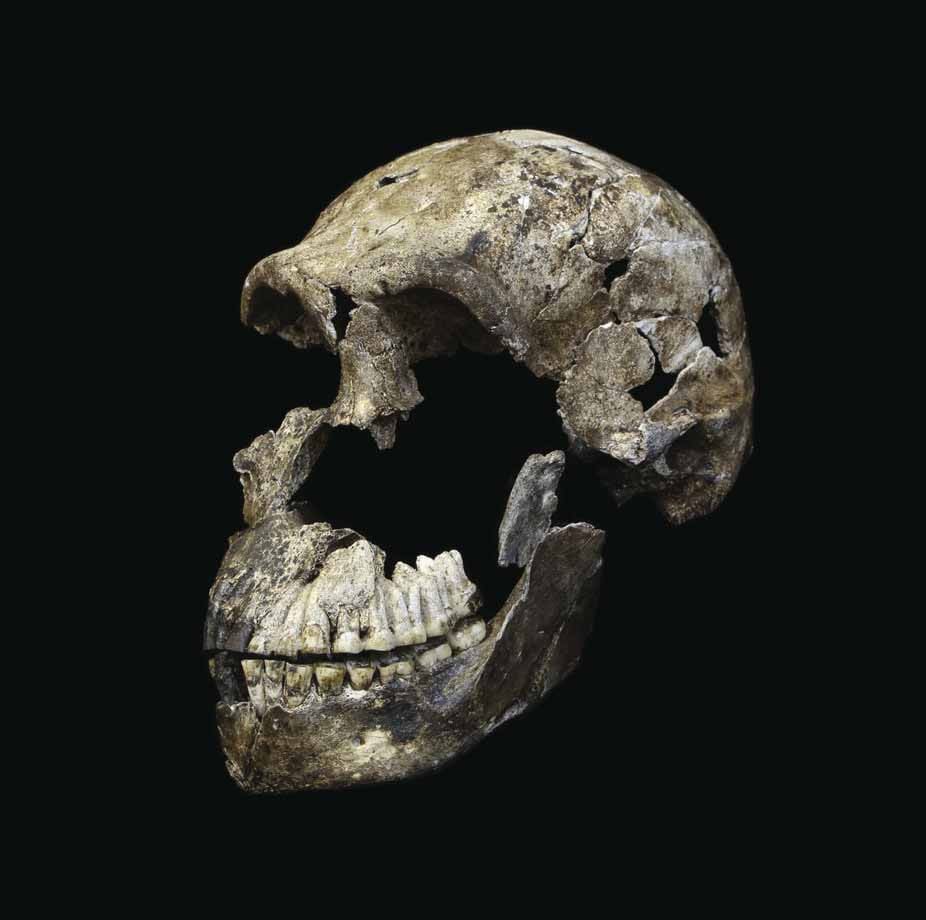
DH1 (holotype), Homo naledi
DH1 (holotype)Homo naledi, 286 ± 50 ka, Rising Star Cave, South Africa. Berger et al. 2015, eLife 4:e09560. DOI: 10.7554/eLife.09560
DH1–DH5 + 1550 specimens, Homo naledi
DH1–DH5 + 1550 specimensHomo naledi, 286 ± 50 ka, Dinaledi Chamber, Rising Star Cave, South Africa. Hawks et al. 2017, eLife 6:e24232. DOI: 10.7554/eLife.24232
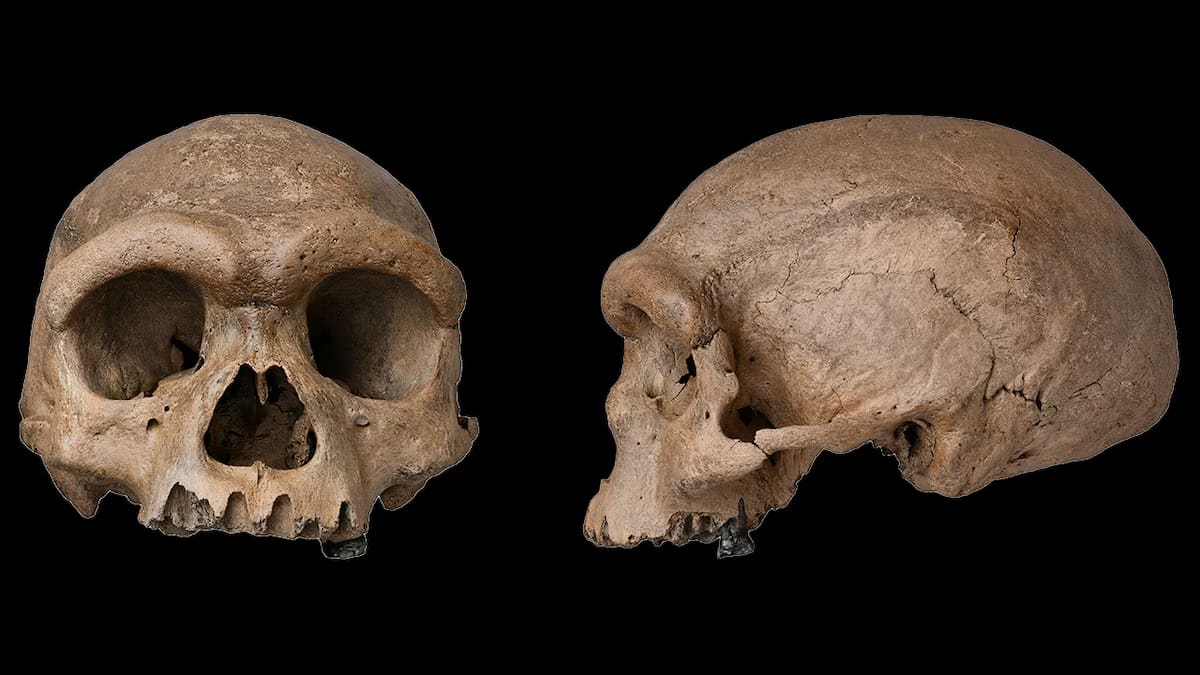
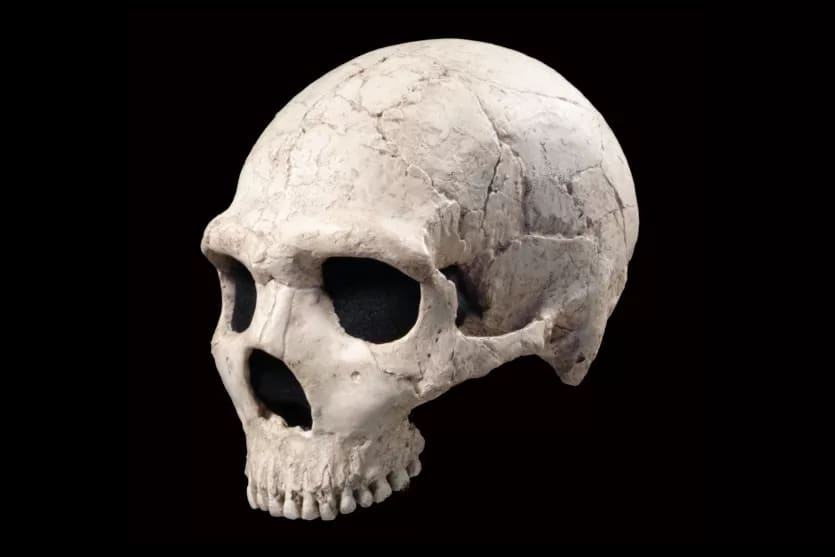
Harbin cranium "Dragon Man", Denisovan
Harbin cranium "Dragon Man"Denisovan, >146 ka, Harbin, China. Ji et al. 2021, The Innovation 2:100132. DOI: 10.1016/j.xinn.2021.100132; Fu et al. 2025
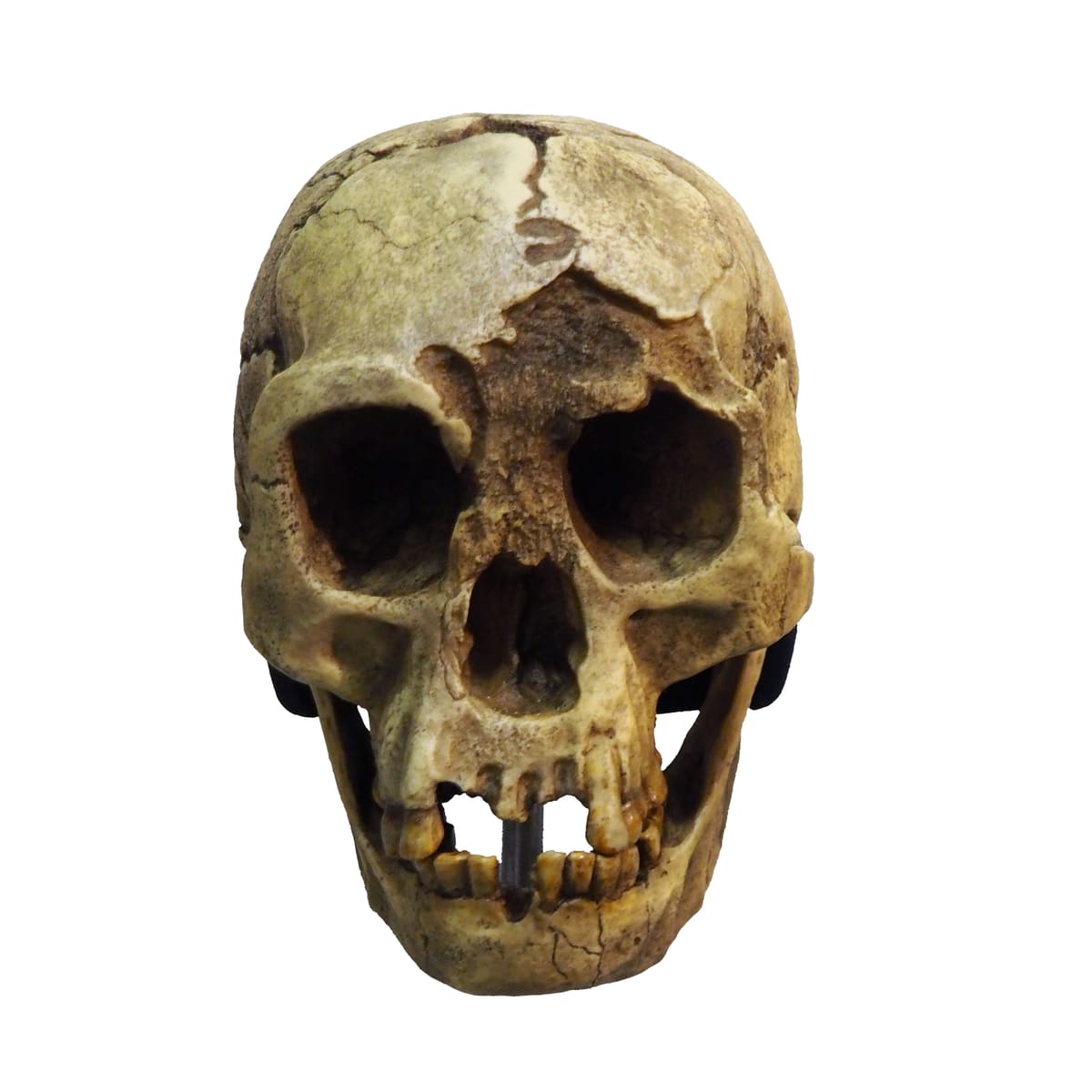
LB1 "Flo" (holotype), Homo floresiensis
LB1 "Flo" (holotype)Homo floresiensis, 80 ± 20 ka, Liang Bua, Flores, Indonesia. Brown et al. 2004, Nature 431:1055–1061. DOI: 10.1038/nature02999
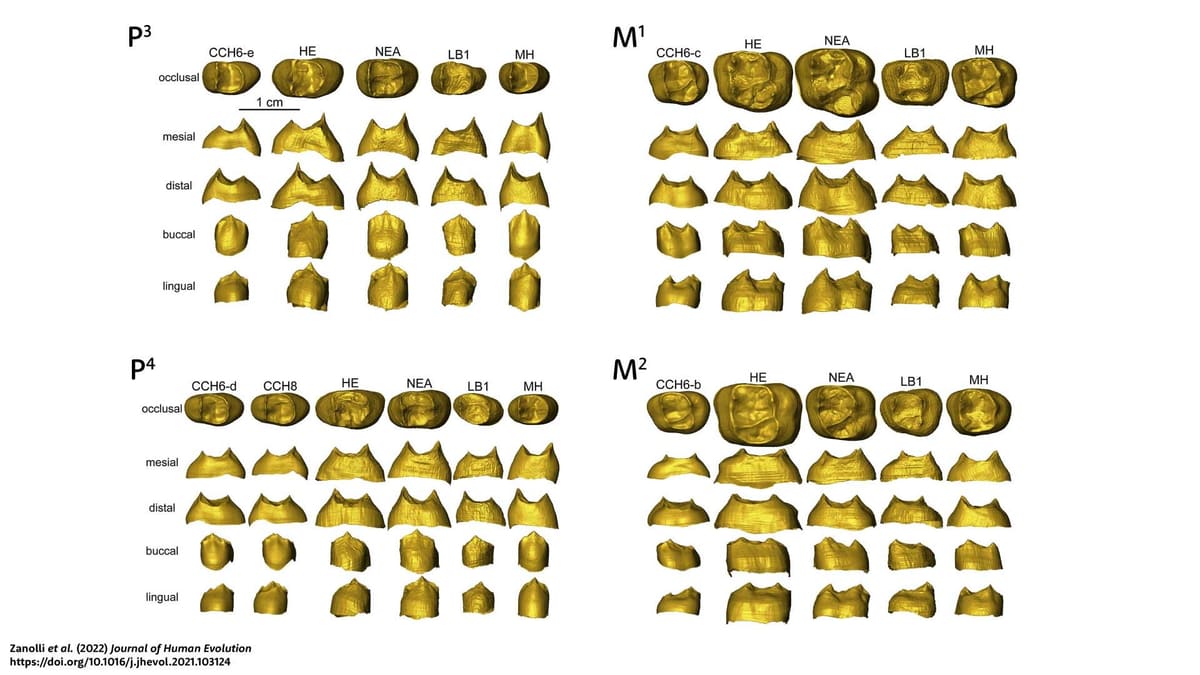
CCH6 (holotype), Homo luzonensis
CCH6 (holotype)Homo luzonensis, 92 ± 42 ka, Callao Cave, Luzon, Philippines. Détroit et al. 2019, Nature 568:181–186. DOI: 10.1038/s41586-019-1067-9
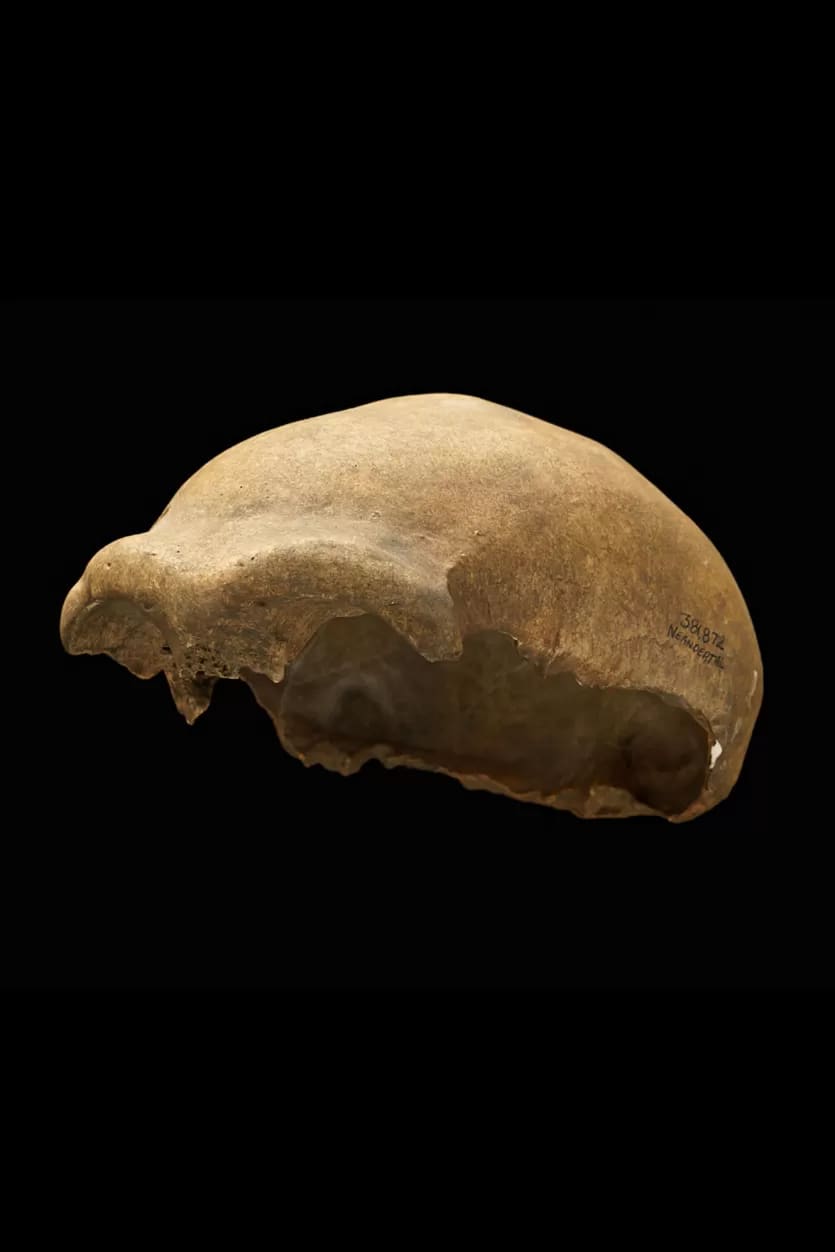
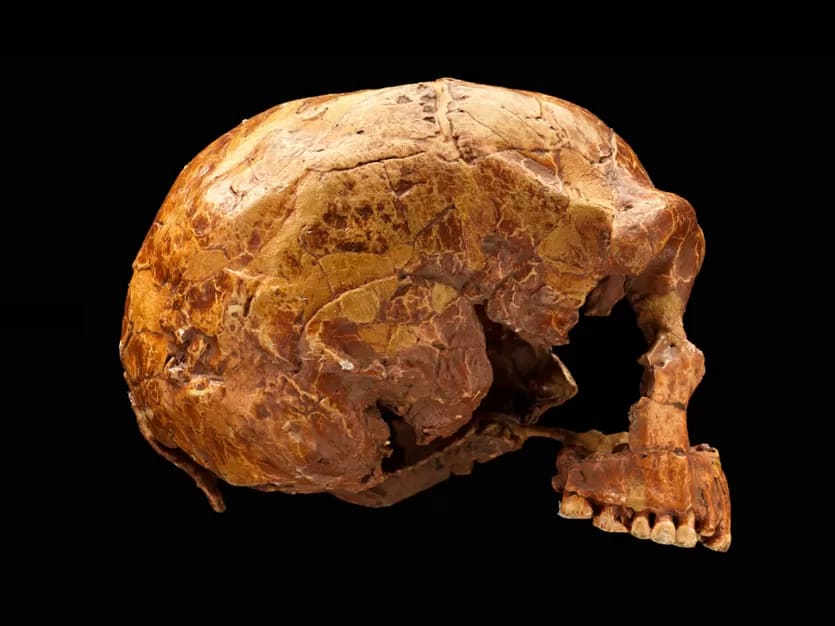
Feldhofer 1 (holotype), Homo neanderthalensis
Feldhofer 1 (holotype)Homo neanderthalensis, ~40 ka, Neander Valley, Germany. Schmitz et al. 2002, PNAS 99:13342–13347. DOI: 10.1073/pnas.192464099
Gibraltar 1, Homo neanderthalensis
Gibraltar 1Homo neanderthalensis, 90 ± 30 ka, Gibraltar. Busk 1865, BAAS Rep. 34:91–92
La Chapelle-aux-Saints 1 "Old Man", Homo neanderthalensis
La Chapelle-aux-Saints 1 "Old Man"Homo neanderthalensis, ~60 ka, Corrèze, France. Boule 1911–1913, Ann. Paléontol. 6–8
La Ferrassie 1, Homo neanderthalensis
La Ferrassie 1Homo neanderthalensis, 47 ± 7 ka, Dordogne, France. Gómez-Olivencia et al. 2018, J. Hum. Evol. 117:13–32. DOI: 10.1016/j.jhevol.2017.12.004
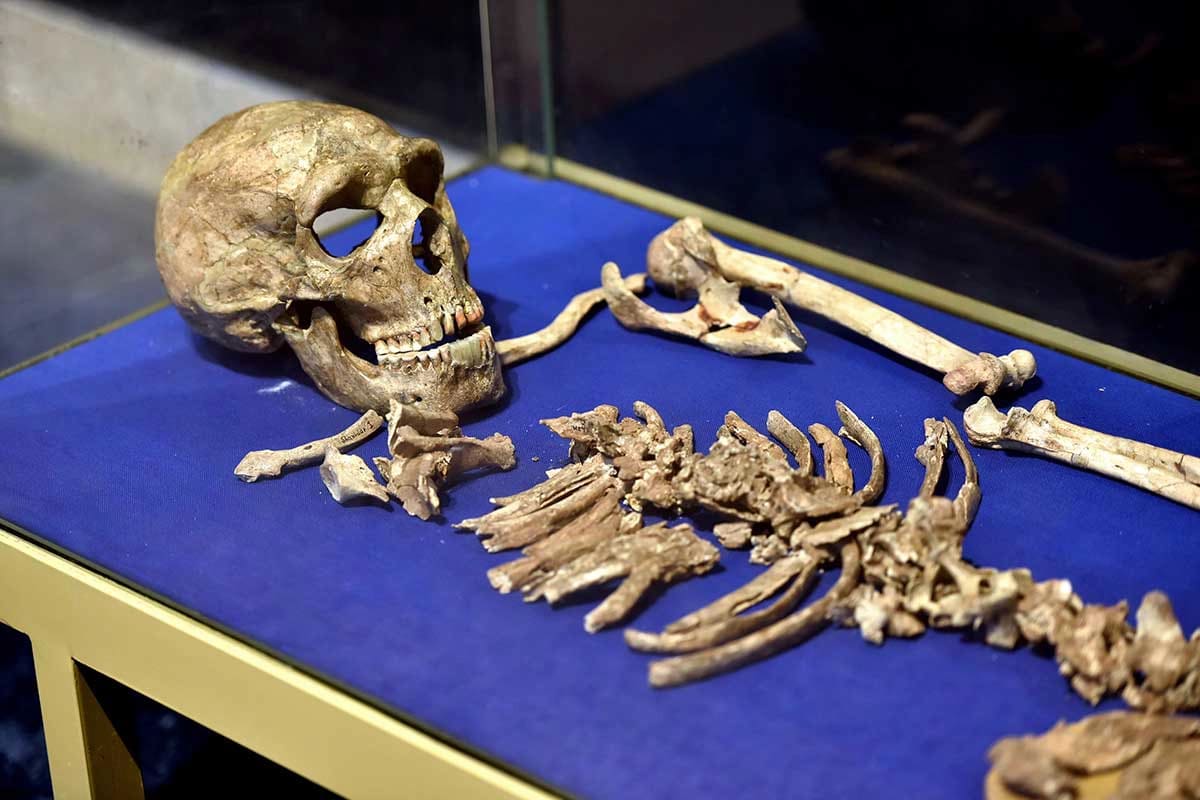
Shanidar 1 "Nandy", Homo neanderthalensis
Shanidar 1 "Nandy"Homo neanderthalensis, 40 ± 5 ka, Shanidar Cave, Iraqi Kurdistan. Trinkaus 1983, The Shanidar Neandertals, Academic Press
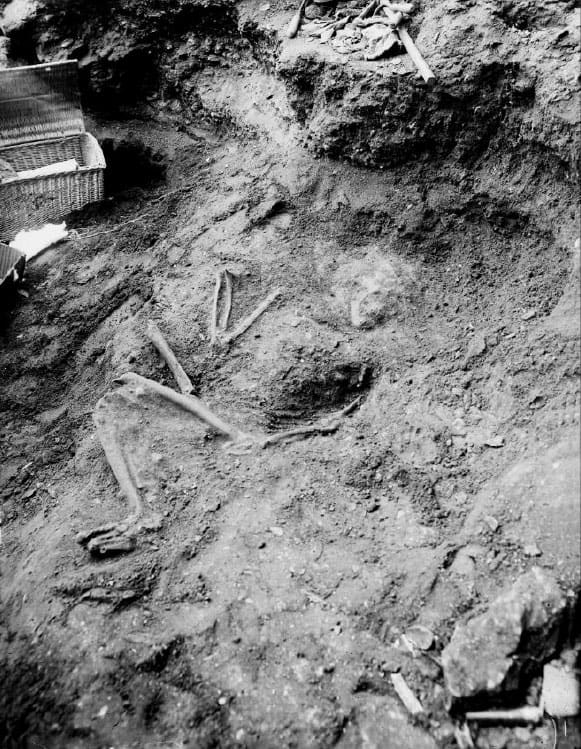
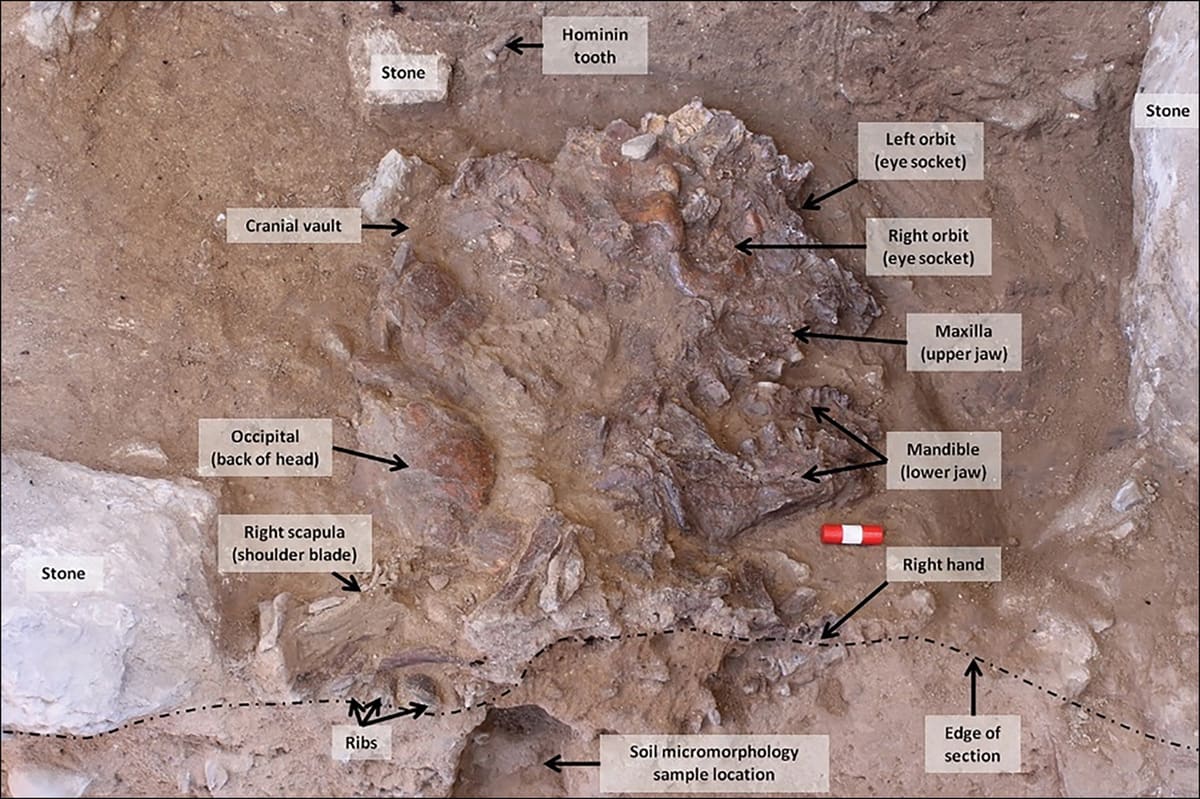
Shanidar 4 "Flower Burial", Homo neanderthalensis
Shanidar 4 "Flower Burial"Homo neanderthalensis, ~73 ka, Shanidar Cave, Iraqi Kurdistan. Solecki 1971, Shanidar: The First Flower People, Knopf
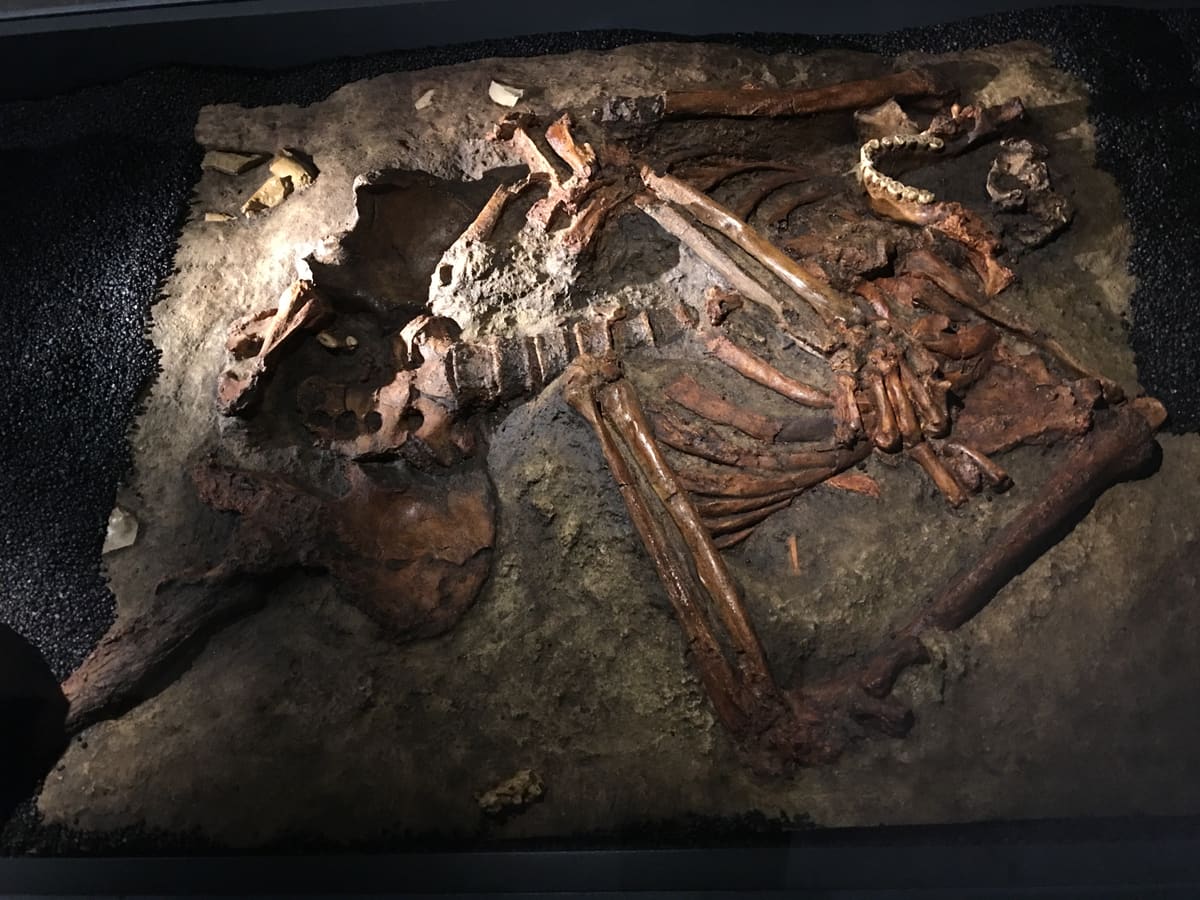
Kebara 2 "Moshe", Homo neanderthalensis
Kebara 2 "Moshe"Homo neanderthalensis, 60.5 ± 0.5 ka, Mount Carmel, Israel. Bar-Yosef et al. 1992, Curr. Anthropol. 33:497–550
Amud 1, Homo neanderthalensis
Amud 1Homo neanderthalensis, 60 ± 10 ka, Upper Galilee, Israel. Suzuki & Takai 1970, The Amud Man, Keigaku
Tabun C1, Homo neanderthalensis
Tabun C1Homo neanderthalensis, ~170 ka, Mount Carmel, Israel. McCown & Keith 1939, Stone Age of Mount Carmel II
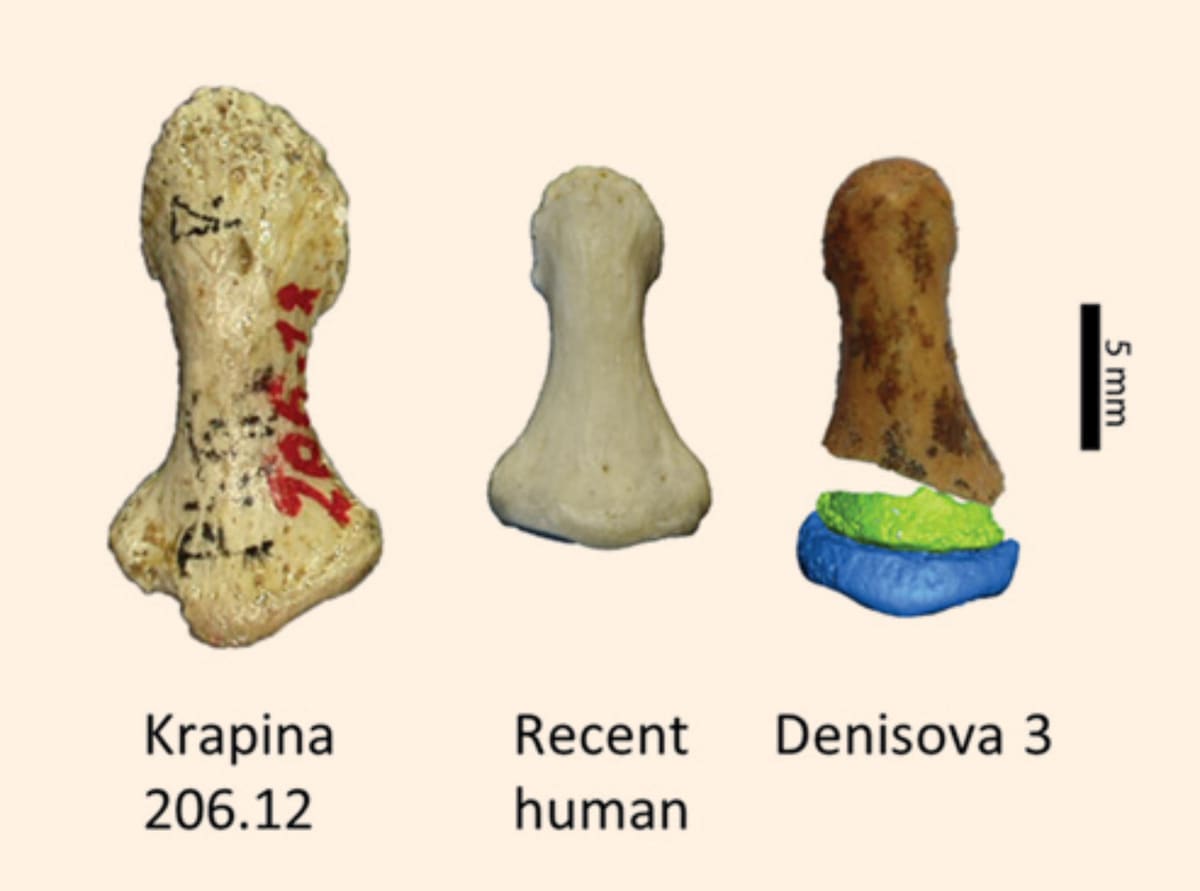
Denisova 3, Denisovan
Denisova 3Denisovan, >50 ka, Denisova Cave, Russia. Krause et al. 2010, Nature 464:894–897. DOI: 10.1038/nature08976; Reich et al. 2010, Nature 468:1053–1060. DOI: 10.1038/nature09710
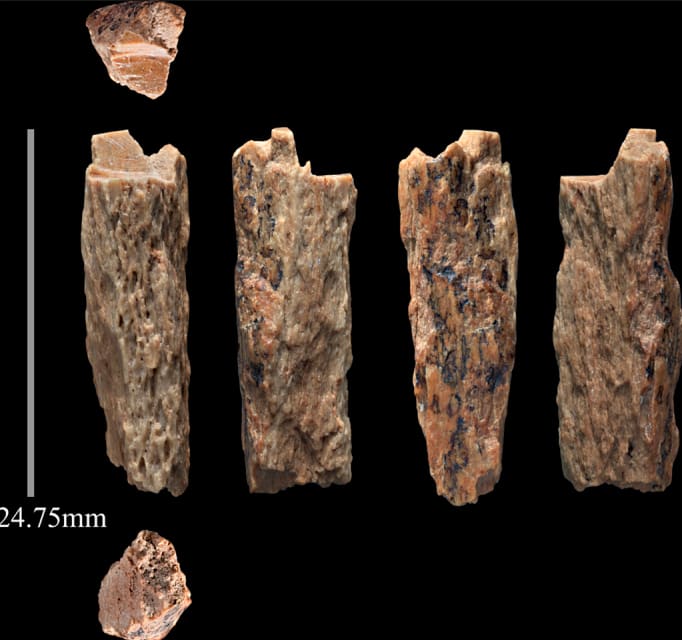
Denisova 11 "Denny", Neanderthal–Denisovan hybrid
Denisova 11 "Denny"Neanderthal–Denisovan hybrid, ~90 ka, Denisova Cave, Russia. Slon et al. 2018, Nature 561:113–116. DOI: 10.1038/s41586-018-0455-x
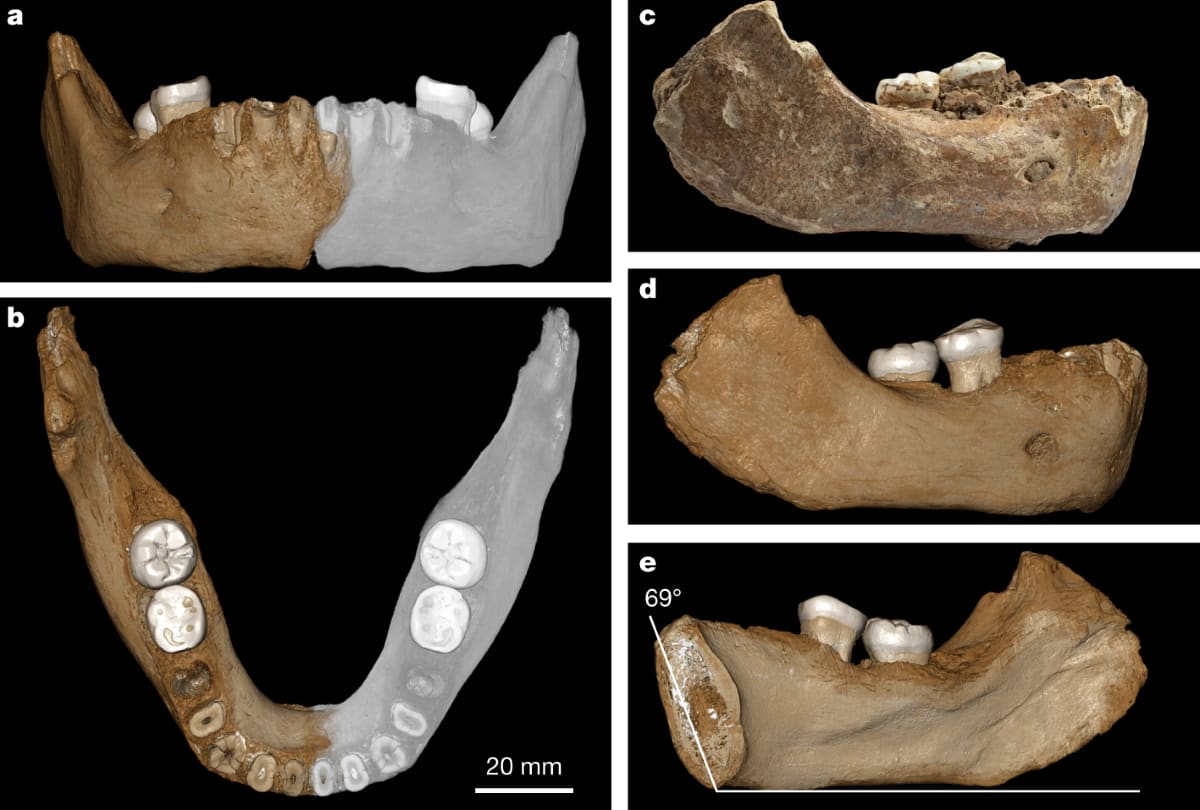
Xiahe mandible, Denisovan
Xiahe mandibleDenisovan, ≥160 ka, Baishiya Karst Cave, Tibet. Chen et al. 2019, Nature 569:409–412. DOI: 10.1038/s41586-019-1139-x

Homo sapiens
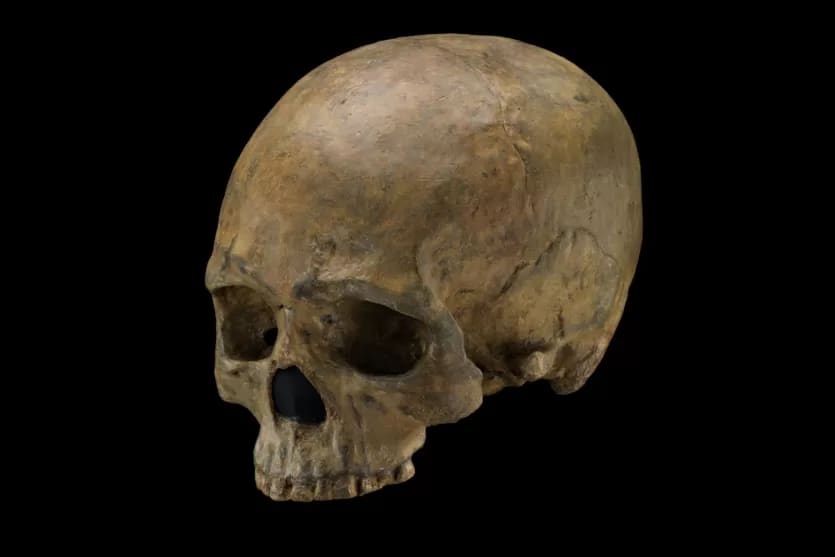
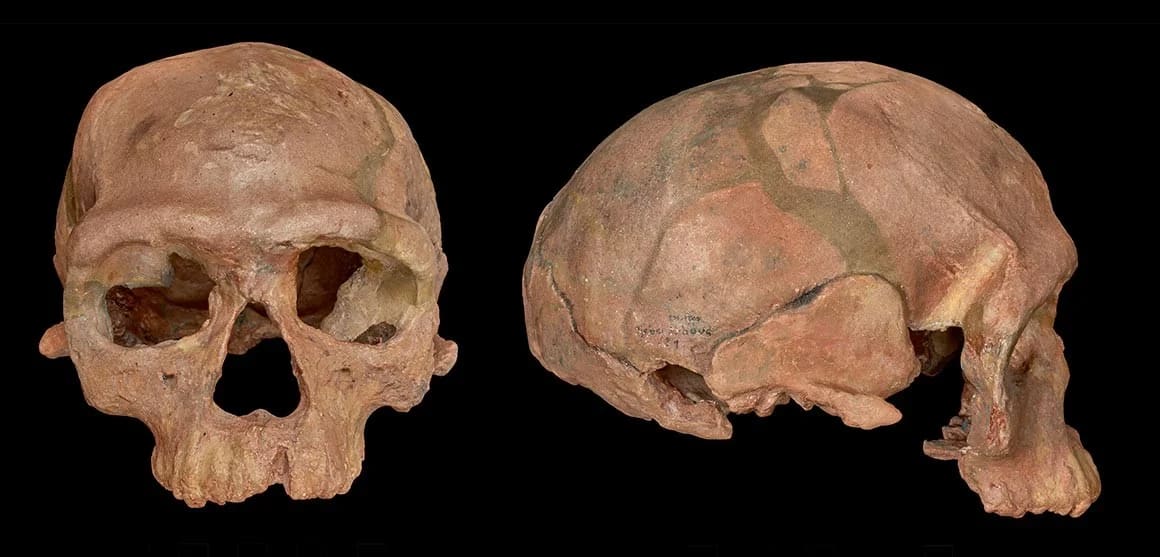
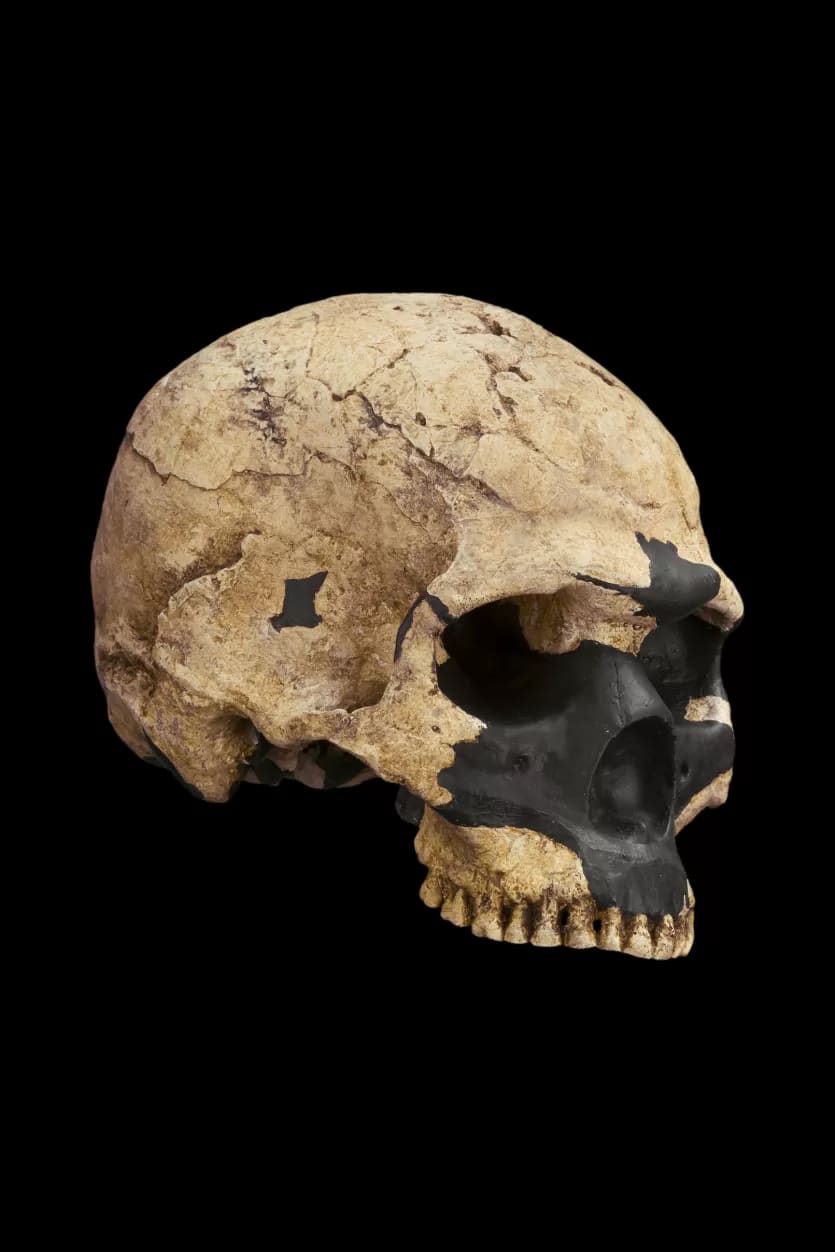
Jebel Irhoud 1/10/11, Homo sapiens
Jebel Irhoud 1/10/11Homo sapiens, 315 ± 34 ka, Jebel Irhoud, Morocco. Hublin et al. 2017, Nature 546:289–292. DOI: 10.1038/nature22336
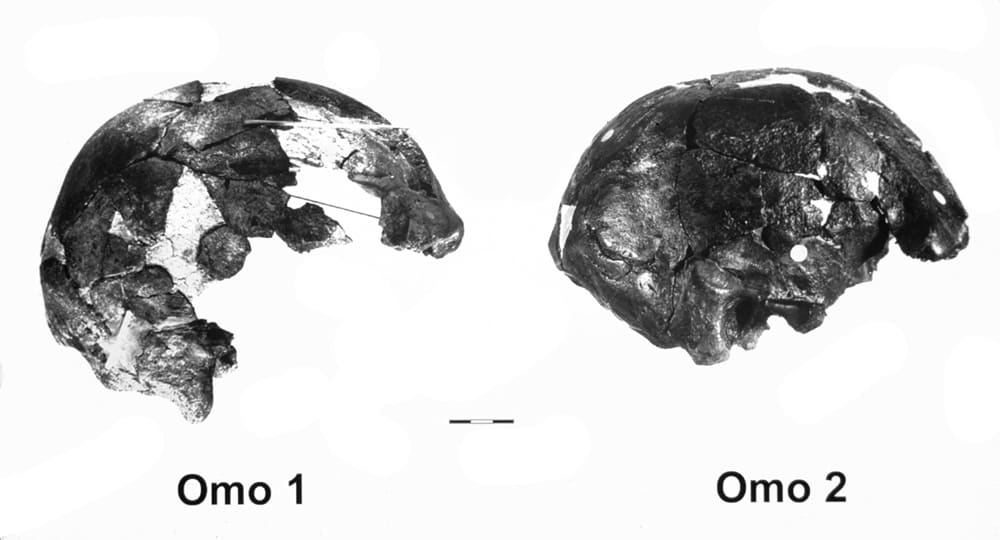
Omo I, Homo sapiens
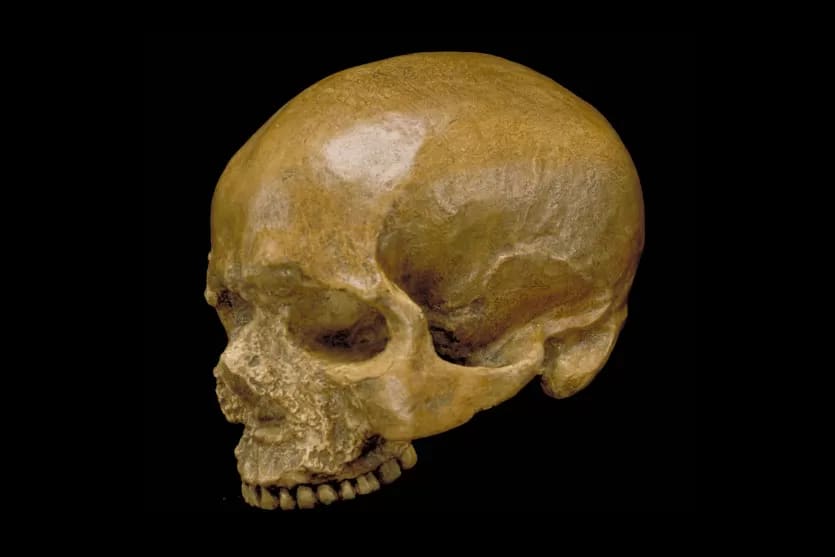
Omo IHomo sapiens, ≥233 ka, Omo Kibish, Ethiopia. Vidal et al. 2022, Nature 601:579–583. DOI: 10.1038/s41586-021-04275-8
Omo II, Homo sapiens
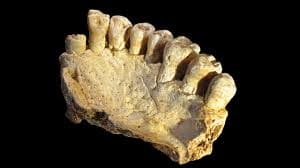
Omo IIHomo sapiens, ≥233 ka, Omo Kibish, Ethiopia. Day 1969, Nature 222:1135–1138
BOU-VP-16/1 (Herto), Homo sapiens
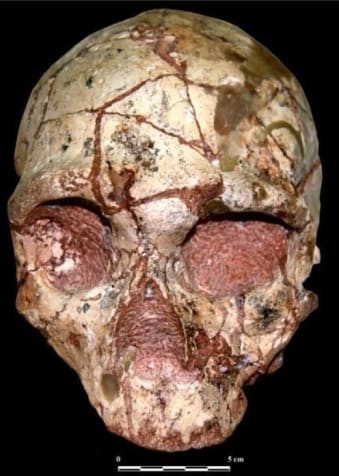
BOU-VP-16/1 (Herto)Homo sapiens, 157 ± 3 ka, Middle Awash, Ethiopia. White et al. 2003, Nature 423:742–747. DOI: 10.1038/nature01669
Florisbad, Homo sapiens
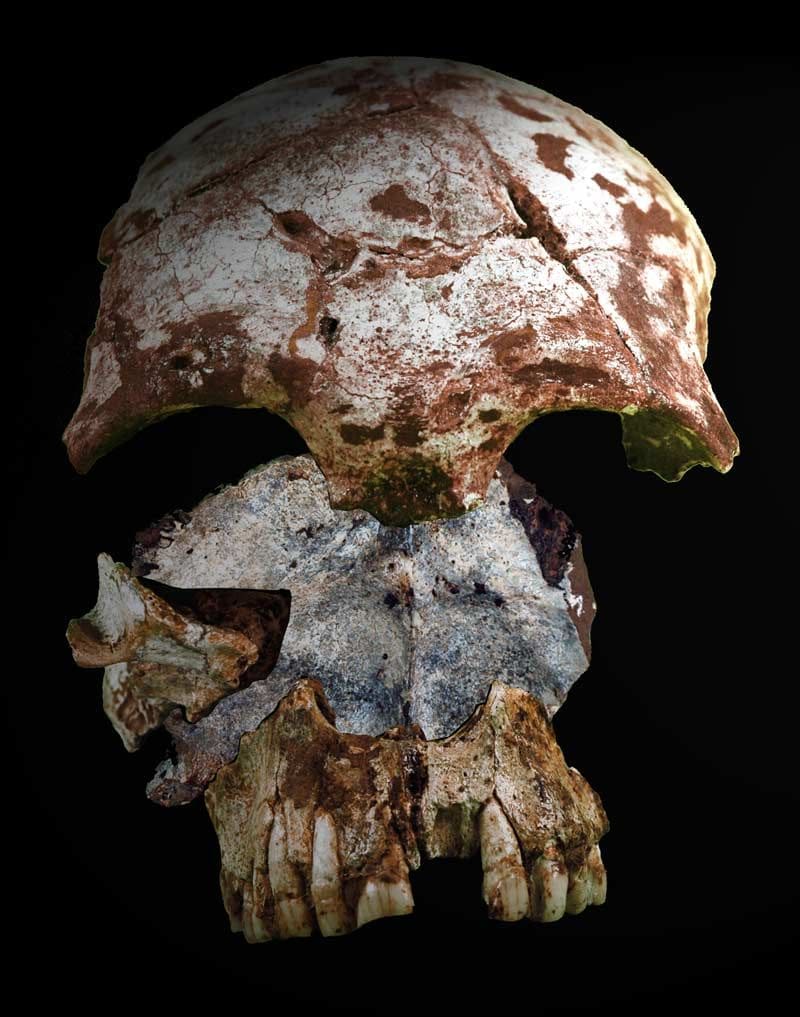
FlorisbadHomo sapiens, ~259 ka, Free State, South Africa. Grün et al. 1996, Nature 382:500–501. DOI: 10.1038/382500a0
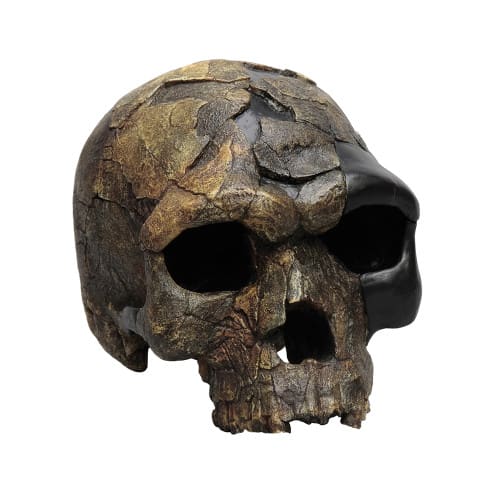
Skhul V, Homo sapiens
Skhul VHomo sapiens, 90 ± 10 ka, Mount Carmel, Israel. Stringer et al. 1989, Nature 338:756–758. DOI: 10.1038/338756a0
Qafzeh 9, Homo sapiens
Qafzeh 9Homo sapiens, 104 ± 12 ka, Qafzeh, Israel. Valladas et al. 1988, Nature 331:614–616. DOI: 10.1038/331614a0
Klasies River, Homo sapiens
Klasies RiverHomo sapiens, 90 ± 30 ka, Eastern Cape, South Africa. Rightmire & Deacon 1991, J. Hum. Evol. 20:131–156. DOI: 10.1016/0047-2484(91)90054-Y
Border Cave 1, Homo sapiens
Border Cave 1Homo sapiens, 126 ± 44 ka, KwaZulu-Natal, South Africa. Grün et al. 1990, Nature 344:537–539. DOI: 10.1038/344537a0
Liujiang, Homo sapiens
LiujiangHomo sapiens, 28 ± 5 ka, Guangxi, China. Ge et al. 2024, Nat. Commun. 15:3584. DOI: 10.1038/s41467-024-47787-3
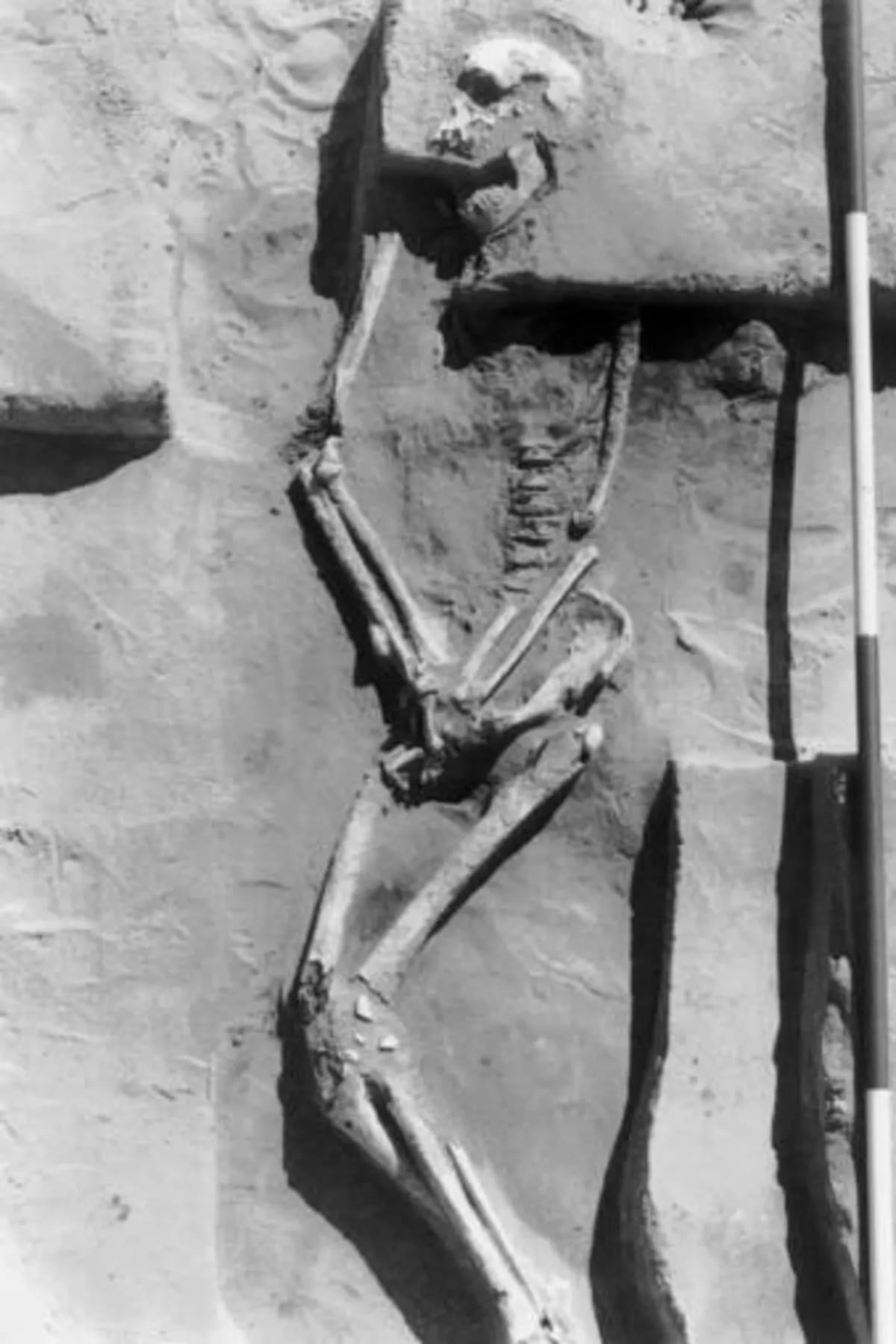
Lake Mungo 3 "Mungo Man", Homo sapiens
Lake Mungo 3 "Mungo Man"Homo sapiens, 40 ± 2 ka, NSW, Australia. Bowler et al. 2003, Nature 421:837–840. DOI: 10.1038/nature01383
Cro-Magnon 1, Homo sapiens
Cro-Magnon 1Homo sapiens, 30 ± 2 ka, Dordogne, France. Lartet 1868, Bull. Soc. Anthropol. Paris 3:335–349
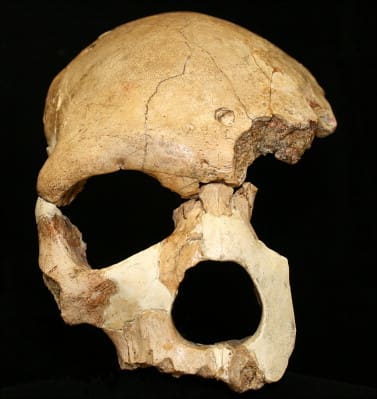
Misliya maxilla, Homo sapiens
Misliya maxillaHomo sapiens, 186 ± 9 ka, Misliya Cave, Mount Carmel, Israel. Hershkovitz et al. 2018, Science 359:456–459. DOI: 10.1126/science.aap8369
Apidima 1, Homo sapiens
Apidima 1Homo sapiens, ~210 ka, Apidima Cave, Mani Peninsula, Greece. Harvati et al. 2019, Nature 571:500–504. DOI: 10.1038/s41586-019-1376-z
Tam Pà Ling, Homo sapiens
Tam Pà LingHomo sapiens, 77 ± 9 ka, Tam Pà Ling Cave, Annamite Mountains, Laos. Freidline et al. 2023, Nat. Commun. 14:3193. DOI: 10.1038/s41467-023-39021-2
Ranis Cave, Homo sapiens
Ranis CaveHomo sapiens, 45.5 ± 2 ka, Ilsenhöhle cave, Ranis, Germany. Hublin et al. 2024, Nature 626:336–341. DOI: 10.1038/s41586-023-06888-9